Have you ever noticed someone who accepts an idea without asking questions or listening to another point of view? This may happen when a person faces indoctrination. It can take place at school, at home, in a workplace, or within a social or political group.
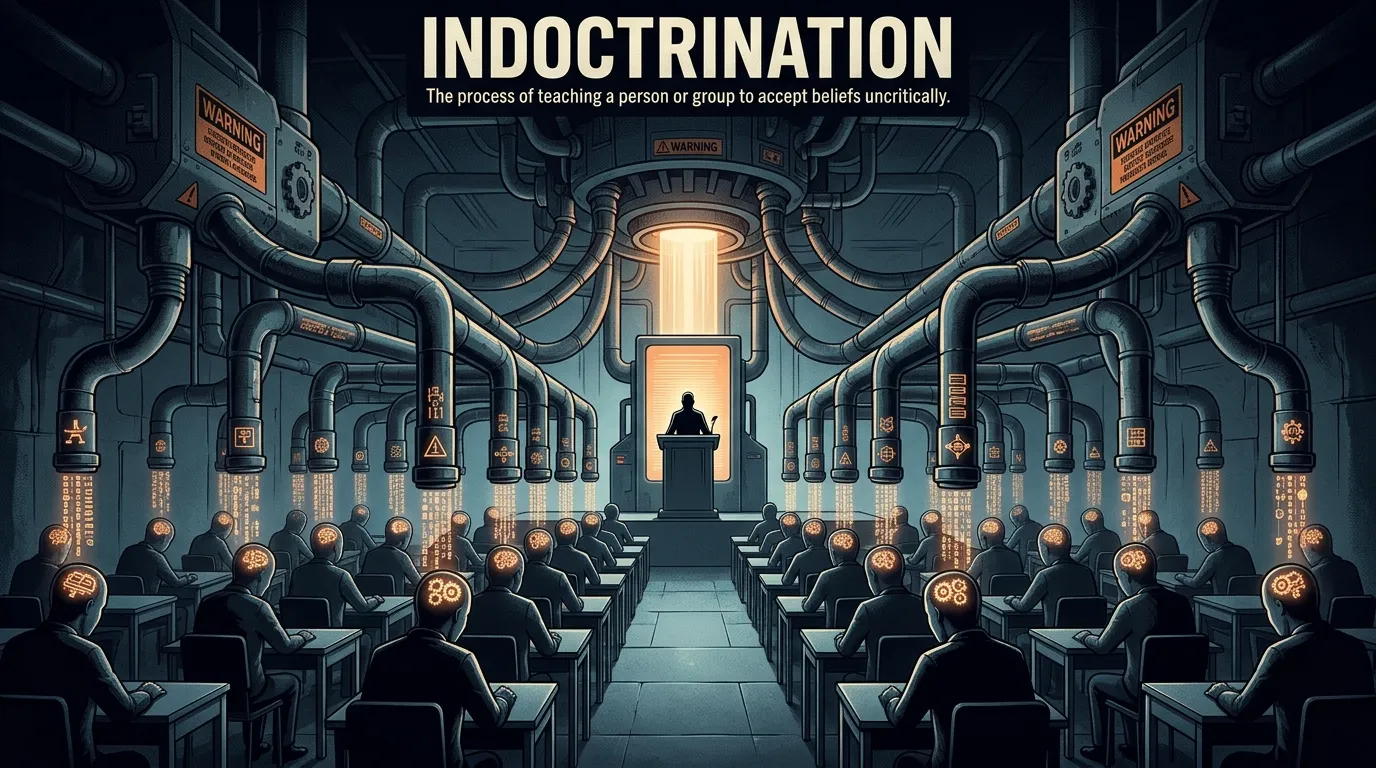
The word indoctrination describes a process in which someone teaches a person to accept certain beliefs or ideas without thinking about them in a critical way. It often involves repeating the same message and discouraging questions or different opinions.
Understanding the indoctrination meaning can help you recognize how people shape beliefs and influence others. It can also help you tell the difference between normal teaching and the pressure to accept one fixed way of thinking.
In this guide, you will learn the definition, simple examples, common signs, types, and effects of indoctrination. You will also see how it differs from education, propaganda, persuasion, and brainwashing.
Quick Answer
Indoctrination means teaching someone to accept a particular belief, idea, or set of principles without questioning or critically examining them.
It often involves repeated messages, one-sided information, and pressure to reject other points of view. People may experience indoctrination in political groups, religious settings, schools, families, or other social environments.
Definition & Meaning of Indoctrination
Indoctrination is the act or process of teaching someone to accept a specific set of beliefs, values, or ideas, often without allowing them to question those beliefs.
In simple words, it means putting an idea into someone’s mind and encouraging them to accept it as true without asking why.
For example, imagine a group leader who tells members that their group is always right. The leader also says that anyone who disagrees is wrong or dangerous. Over time, members may stop asking questions and accept the leader’s views.
That process may be a form of indoctrination.
The word often has a negative meaning in modern English. It does not simply describe teaching or sharing beliefs. It points to a lack of open thought, free questions, and fair discussion.
Cambridge defines the term around repeating an idea until someone accepts it without criticism or question. Oxford also highlights the act of making someone accept beliefs while keeping other views out of consideration.
Indoctrination Meaning in Simple Words
The easiest way to understand indoctrination is to think about the difference between learning an idea and being told to accept it.
- Learning: Someone explains an idea and allows you to ask questions.
- Indoctrination: Someone teaches an idea and expects you to accept it without question.
For example, a teacher may explain different political systems and ask students to compare them. This supports learning.
But if the teacher says that only one political system is good and students must reject all others, the teaching may become indoctrination.
The main issue is not the belief itself. The issue is whether people can think freely, ask questions, and consider other views.
Common Signs of Indoctrination
Indoctrination does not always happen in an obvious way. Sometimes it develops slowly through daily lessons, group activities, repeated messages, or social pressure.
Here are some common signs to look for.
1. Repeating the Same Message
A person or group repeats the same idea again and again. They may use slogans, speeches, videos, or lessons to make the message feel true.
Over time, people may accept the message without checking the facts.
2. Discouraging Questions
People may feel afraid to ask questions. A leader, teacher, or group member may treat questions as a sign of disloyalty.
Healthy learning should allow people to ask why and how.
3. Rejecting Other Opinions
An indoctrinating group may present its beliefs as the only correct ones. It may describe all other views as wrong, harmful, or foolish.
This makes it harder for members to think about different ideas.
4. Using Fear or Guilt
Some people use fear, shame, or guilt to control what others believe.
For example, a group leader may tell members that they will lose their friends if they disagree. This pressure can make people afraid to express their real thoughts.
5. Controlling Information
People may only receive information that supports one belief. They may not get a chance to read different sources or hear other opinions.
When someone controls what people can learn, they can also shape how those people understand the world.
6. Demanding Complete Loyalty
A group may expect members to agree with its leader at all times. It may treat disagreement as betrayal.
Loyalty itself is not a sign of indoctrination. The warning sign appears when loyalty replaces independent thought.
Real-Life Examples of Indoctrination
Examples make the meaning much easier to understand. Indoctrination can appear in many parts of daily life.
Example 1: Political Indoctrination
Imagine a political group that tells its members that its leader never makes mistakes. Members only receive news that supports the leader.
They also hear that people who support other parties are enemies.
If the group discourages questions and teaches members to accept its views without thought, this may be political indoctrination.
Example 2: Religious Indoctrination
Imagine a group that teaches one religious belief but does not allow members to ask questions or study other interpretations.
The group may punish people who disagree or make them feel guilty for thinking differently.
This can be an example of religious indoctrination.
However, teaching religious beliefs, reading sacred texts, or practicing a faith does not automatically mean indoctrination. The key issue is whether people can think, ask questions, and make their own choices.
Example 3: Indoctrination in Schools
A school may teach students that one country’s history is perfect and that its leaders have never made mistakes.
Teachers may avoid facts that challenge this view. Students may also lose marks for giving a different but well-supported answer.
This kind of one-sided teaching may show signs of indoctrination.
Teaching national history, values, or civic duties is not automatically indoctrination. Good education also helps students examine evidence and understand different views.
Example 4: Family Indoctrination
Parents naturally pass values, habits, and beliefs to their children. This is a normal part of family life.
But imagine parents who tell their child that their family is always right. They also forbid the child from asking questions or forming different opinions.
If the parents use pressure to make the child accept every belief without thought, this may become indoctrination.
Example 5: Workplace Indoctrination
Imagine a company where managers tell workers that the business can never make mistakes.
Employees must praise every decision. Anyone who reports a problem faces pressure or punishment.
This may create an environment where people accept one fixed view instead of thinking freely.
Types of Indoctrination
Indoctrination can happen in different settings. The message may change, but the basic pattern stays similar: someone encourages others to accept certain beliefs without fair questions or open discussion.
1. Religious Indoctrination
Religious indoctrination involves teaching religious beliefs in a way that discourages questions or other views.
It may occur when a group demands full agreement and does not allow members to study or discuss different interpretations.
It is important to understand that religious education and faith are not the same as indoctrination. People can follow a religion while still thinking deeply and asking questions.
2. Political Indoctrination
Political indoctrination happens when a person or group tries to make others accept a fixed political belief.
For example, a group may teach that its political leaders are always right. It may also hide information that challenges its message.
This can limit people’s ability to make informed political choices.
3. Educational Indoctrination
Educational indoctrination happens when teaching focuses on making students accept certain beliefs instead of helping them examine ideas.
A classroom should help students understand facts, ask questions, and build their own knowledge.
When teachers discourage independent thought and demand agreement with one viewpoint, problems can arise.
4. Social Indoctrination
Social indoctrination involves teaching people to follow certain social beliefs or group rules without questioning them.
For example, a community may teach that people must follow a certain lifestyle to gain respect. Anyone who makes a different choice may face shame or rejection.
This can make people follow group expectations even when they do not agree with them.
Indoctrination vs. Education: What Is the Difference?
People often confuse indoctrination with education because both involve teaching ideas and beliefs.
However, they have an important difference. Education aims to build knowledge and understanding. Indoctrination aims to make someone accept a particular belief without critical thought.
| Education | Indoctrination |
| Encourages questions | Discourages questions |
| Presents evidence | May present one-sided information |
| Allows different views | Rejects other opinions |
| Builds critical thinking | Limits independent thinking |
| Supports open discussion | Demands agreement |
| Helps students understand | Pushes students to accept beliefs |
For example, an educated student can explain why people support different political ideas. An indoctrinated student may only repeat the ideas taught by a group.
The difference does not depend on the subject. History, religion, science, and politics can all involve healthy education. The teaching method matters.
Indoctrination vs. Brainwashing vs. Propaganda
These three terms are related, but they do not have exactly the same meaning.
Indoctrination focuses on teaching people to accept beliefs without questioning them.
Brainwashing usually refers to more intense methods of changing someone’s beliefs, attitudes, or feelings. These methods may involve strong pressure, isolation, or coercion. The American Psychological Association describes brainwashing as a broad class of intense, often coercive tactics.
Propaganda involves spreading messages that support a particular cause, political view, or group. It may use selected facts, emotional language, or misleading claims to influence people.
| Term | Main purpose | Common method |
| Indoctrination | Build acceptance of fixed beliefs | Repeated teaching and limited debate |
| Brainwashing | Bring about deep changes in beliefs | Intense pressure or coercion |
| Propaganda | Influence public opinion | One-sided messages and emotional appeals |
These terms can overlap. For example, a political group may spread propaganda to support its message and use indoctrination to teach members to accept that message.
However, not every persuasive message is propaganda, and not every form of indoctrination involves brainwashing.
How Does Indoctrination Affect People?
Indoctrination can affect how people think, learn, and make choices. Its effects depend on the setting, the methods used, and the person’s situation.
Here are some possible effects:
- Less critical thinking: People may stop checking whether an idea is true.
- Fear of disagreement: They may worry about speaking against a group or leader.
- Limited knowledge: They may only learn information that supports one belief.
- Group pressure: They may follow others to avoid rejection.
- Poor decision-making: They may make choices without considering all available facts.
- Difficulty accepting change: They may reject new evidence because it challenges old beliefs.
These effects do not happen to everyone in the same way. A person’s experience can vary based on their family, social group, education, and access to information.
How to Recognize and Protect Yourself From Indoctrination
You do not need to reject every belief or disagree with everyone to protect your ability to think freely.
The goal is to understand what you believe and why you believe it.
Here are some simple steps you can follow.
1. Ask Questions
Do not be afraid to ask how someone reached a conclusion. Ask what facts support the idea and whether other explanations exist.
Good questions help you understand a subject more clearly.
2. Check Different Sources
Do not depend on one person, website, book, or social media account for every answer.
Compare information from reliable sources. Look for evidence that supports and challenges the claim.
3. Think Before You Agree
When someone presents a strong opinion, take time to think about it.
Ask yourself whether the person has shared facts or only personal beliefs. You do not need to agree with an idea just because someone you respect supports it.
4. Notice Emotional Pressure
Pay attention when someone uses fear, shame, or threats to stop you from asking questions.
Strong emotions can affect how people make choices. Take a step back when you feel pressured to agree.
5. Stay Open to New Ideas
You do not have to accept every new opinion. However, you should be willing to examine evidence that challenges what you already believe.
Changing your mind after learning new facts can be a sign of good judgment, not weakness.
6. Keep Your Right to Think Independently
You can respect your family, teachers, religion, or community while still asking questions.
Healthy relationships should leave room for honest discussion and personal thought.
Quick Reference Checklist: Is It Indoctrination?
Use this table to understand whether a teaching method may show signs of indoctrination.
| Situation | What to look for |
| Repeated messages | The same belief appears again and again |
| Questions | People discourage or punish questions |
| Other opinions | Different views receive unfair treatment |
| Information | Only one side of a subject gets attention |
| Group loyalty | Members must agree to remain accepted |
| Fear or guilt | People use pressure to control beliefs |
| Independent thought | People cannot make their own choices |
One sign alone does not prove indoctrination. Look at the full situation, including the teaching method, the freedom to ask questions, and the way people treat disagreement.
FAQs:
1. What is the simple meaning of indoctrination?
Indoctrination means teaching someone to accept certain beliefs or ideas without questioning them. It often involves repeated messages, one-sided information, and pressure to reject other opinions.
2. Is indoctrination good or bad?
Indoctrination usually has a negative meaning because it limits independent thinking. It can prevent people from asking questions or considering other views. However, teaching beliefs or values does not automatically mean indoctrination.
3. What is an example of indoctrination?
A common example is a group leader who tells members that their beliefs are always correct. The leader discourages questions and teaches members to reject anyone who disagrees. This can be a form of indoctrination.
4. What is the difference between indoctrination and education?
Education helps people gain knowledge, examine facts, and develop critical thinking skills. Indoctrination encourages people to accept certain beliefs without questioning them. Education supports open discussion, while indoctrination often limits it.
5. Can indoctrination happen in families?
Yes. Indoctrination can happen in families when parents force children to accept certain beliefs and punish them for asking questions or having different opinions. Sharing family values alone does not count as indoctrination.
6. What are the main signs of indoctrination?
Common signs include repeated messages, fear of disagreement, limited information, pressure to follow a leader, rejection of other opinions, and discouragement of independent thinking.
7. Is indoctrination the same as brainwashing?
No. Both terms relate to changing people’s beliefs, but they have different meanings. Indoctrination often uses repeated teaching and limited discussion. Brainwashing usually refers to more intense methods that may involve pressure, isolation, or coercion.
Conclusion:
Understanding the indoctrination meaning helps you recognize how people influence the beliefs and thoughts of others. It means teaching someone to accept certain ideas without questioning or examining them.
Indoctrination can happen in schools, families, religious groups, political settings, and workplaces. However, teaching beliefs or sharing opinions does not always mean indoctrination.
The most important thing is to support independent thinking. Ask questions, check facts, listen to different views, and make informed choices. You can respect other people’s beliefs while still thinking for yourself.

Hi, I’m Nathan Foster. I’m passionate about words, their meanings, and the different ways we use them in everyday communication. I enjoy explaining unfamiliar words in simple English so readers can understand them without confusion.
At SimiliezMeta.com, I focus on word meanings, definitions, synonyms, antonyms, and useful examples that show how words work in real sentences. I believe learning a new word should be simple, practical, and helpful for everyday life.


