Have you heard someone say “papi chulo” in a song, a text, or a flirty chat? You may wonder if it is a compliment, a pet name, or a slang term with a hidden meaning.
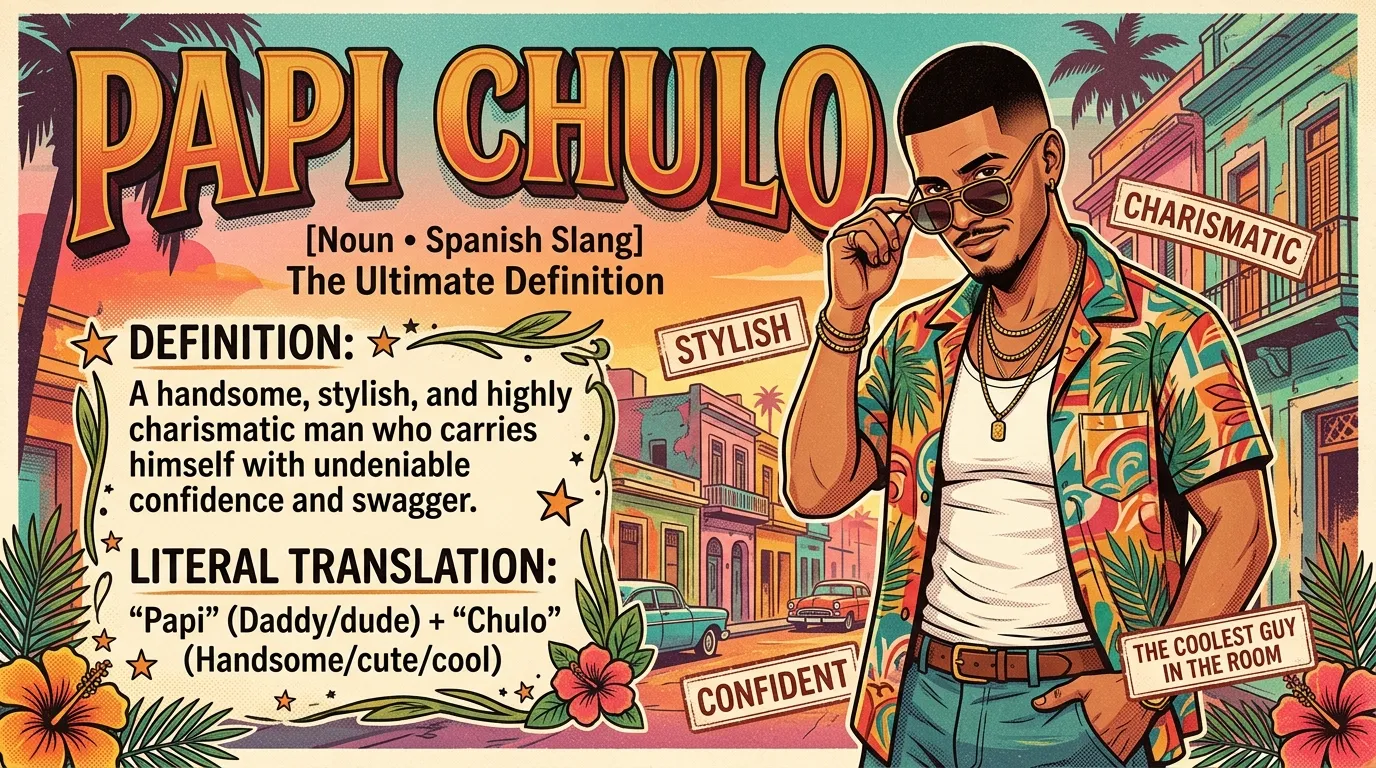
The phrase “papi chulo” usually means “handsome man,” “attractive guy,” or “hot guy.” It comes from Spanish and often sounds playful, flirty, or affectionate. The exact meaning depends on who says it, how they say it, and the setting.
In some cases, it can sound sweet and loving. In others, it may feel bold, cheeky, or too personal. It is not a phrase you should use with everyone.
This guide explains the papi chulo meaning in simple English. You will learn what each word means, how people use the phrase in everyday talk, and whether it works as a romantic nickname. You will also see real-life examples, common mistakes, and tips for using it in the right way.
By the end, you will know what the phrase means and how to understand it when you hear it in a song, message, or conversation.
Quick Answer: What Does Papi Chulo Mean?
Papi chulo is a Spanish slang phrase that often means “handsome guy,” “hot man,” or “attractive man.” People may use it as a flirty nickname for a man they find good-looking.
It can also be a playful term of affection, much like calling someone “handsome” or “babe.” Its tone changes with the speaker, the relationship, and the culture.
The phrase is informal, so it fits casual talk better than formal settings.
Papi Chulo Meaning in English
The closest English meanings of papi chulo include:
- Handsome man
- Good-looking guy
- Hot guy
- Cute guy
- Attractive man
- Sexy man, in some contexts
- Babe or handsome, when used as a nickname
These meanings are close, but they are not exact in every situation. For example, one person may use it to praise a man’s looks, while another may use it as a playful name for a partner.
The phrase can carry a sense of confidence and charm. It may suggest that someone looks good and knows it.
Still, context matters. A romantic partner may say it with love, while a stranger may use it in a more forward or teasing way.
What Does Papi Mean in Spanish?
The word papi is an informal form of papá, which means “dad” or “father” in Spanish.
But people do not always use papi to mean a father. In casual speech, it can work as a term of affection. Depending on the country and situation, it may mean “babe,” “sweetheart,” or “handsome.”
For example, a person might call their partner papi as a loving nickname. In some communities, it can also sound flirty or suggest physical attraction.
The word does not have one fixed meaning in every conversation. The relationship between the speakers helps shape its meaning.
What Does Chulo Mean in Spanish?
The word chulo has several meanings in Spanish. It can mean “cool,” “cute,” “good-looking,” or “stylish” in some places and situations.
Its meaning also changes by region. In certain contexts, it can refer to someone who acts cocky or thinks highly of himself. In other uses, it can carry a more negative meaning.
That is why you should not translate every use of chulo in the same way.
When someone says papi chulo as a flirtatious phrase, the intended meaning is often a handsome, charming, or attractive man. The phrase as a whole matters more than a word-for-word translation.
Is Papi Chulo a Romantic or Flirty Term?
Yes, papi chulo can be romantic or flirty. People may use it to show attraction, tease a partner, or make a conversation feel playful.
For example, someone might text the phrase to a boyfriend after seeing a good photo of him. Another person might use it as a cheeky compliment during a lighthearted chat.
However, it does not always mean deep love. A person can use it to flirt without having a serious romantic interest.
Here is how the tone may change:
- Romantic: A partner uses it as a pet name.
- Flirty: Someone uses it to show attraction.
- Playful: Friends or partners joke with each other.
- Bold: Someone uses it in a suggestive or forward way.
Do not assume that a person wants a relationship just because they call someone papi chulo. The phrase alone cannot tell you how serious their feelings are.
Is Papi Chulo a Compliment?
Most often, yes. In a flirty or affectionate setting, it can be a compliment about a man’s looks, charm, or style.
It may be similar to saying “You look handsome,” “Hey, good-looking,” or “Looking hot!” in English.
But not every use is meant as praise. The speaker may be joking, teasing, or using the phrase in a way that fits their usual style of speech.
Pay attention to the words around it, the tone of voice, and your relationship with the person. These clues can help you understand whether it is a sincere compliment or just playful banter.
How to Use Papi Chulo in a Sentence
The phrase is informal. It works best in casual chats, romantic messages, playful conversations, and some social media captions.
Here are examples of how someone might use it:
| Example | Likely meaning |
| “Hey, papi chulo!” | A playful greeting to an attractive man |
| “Good morning, papi chulo.” | An affectionate greeting |
| “Looking good, papi chulo!” | A compliment about someone’s appearance |
| “That’s my papi chulo.” | A loving or playful nickname for a partner |
| “Who is that papi chulo?” | Asking about an attractive man |
| “Come here, papi chulo.” | A flirty or affectionate invitation |
These are examples of possible use, not fixed translations. The same words may sound sweet in one conversation and too forward in another.
Papi Chulo in Text Messages
In texts, the phrase can make a message feel warmer, bolder, or more playful.
For example:
- “Hey, papi chulo 😘”
- “Looking handsome today, papi chulo!”
- “Good night, papi chulo ❤️”
- “You clean up well, papi chulo 😉”
Emojis can add a romantic or teasing tone, but they do not change the core meaning of the words.
If you are unsure whether someone will like the nickname, start with a simple compliment. Use more intimate language only when the other person seems comfortable with it.
Papi Chulo vs. Papi: What’s the Difference?
The two phrases are related, but they do not mean exactly the same thing.
Papi is often a general term of affection. It may be used for a partner or as a casual, playful way to address someone. Its meaning depends on the speaker and the setting.
Papi chulo adds the word chulo, which often brings in the idea of being handsome, stylish, charming, or attractive in this context.
In simple terms, papi can sound affectionate, while papi chulo often puts more focus on a man’s looks or charm.
Neither phrase has one universal meaning across all Spanish-speaking communities.
Papi Chulo vs. Mami Chula
Mami chula is a related phrase often used for an attractive, stylish, or charming woman. It can also work as a flirty or affectionate nickname.
The key difference is the person being addressed.
| Phrase | Common English meaning | Typical use |
| Papi chulo | Handsome or attractive man | A nickname for a man |
| Mami chula | Pretty or attractive woman | A nickname for a woman |
Both phrases are informal. Their tone can be loving, playful, flirty, or suggestive, depending on the situation.
The terms may also vary in use across regions and communities. Do not assume that everyone who speaks Spanish uses them in the same way.
Is Papi Chulo a Bad Word?
No, papi chulo is not automatically a swear word or an insult. It is often used as a playful or flirty expression.
Still, that does not mean it is right for every situation.
Some people may find it charming when a partner says it. Others may feel uncomfortable if a stranger uses it. In some contexts, the wording may sound too sexual, overly familiar, or disrespectful.
Think about these points before using it:
- Your relationship: Is this person your partner, a close friend, or a stranger?
- The setting: Are you chatting privately or speaking in a formal place?
- Their comfort: Do they enjoy flirty nicknames?
- Your tone: Are you being kind, playful, or pushy?
A phrase can be harmless in one setting and unwelcome in another. Respect matters more than slang.
What Does Papi Chulo Mean in Songs and Pop Culture?
You may hear papi chulo in Latin music, dance tracks, social media videos, and online conversations.
In these settings, the phrase often helps create a playful, confident, romantic, or sensual mood. It may refer to an attractive man or work as a catchy nickname.
Music can also give a phrase a stronger meaning than it has in everyday speech. A singer may use it to express desire, flirtation, confidence, or attraction.
The exact meaning depends on the lyrics and the wider message of the song. You should not assume that every song uses the phrase in the same way.
If you see it in a caption or video, look at the surrounding words and images to understand the intended tone.
Common Mistakes When Understanding Papi Chulo
It is easy to misunderstand a slang phrase when you translate it word by word. Here are a few mistakes to avoid.
| Common mistake | Better way to understand it |
| Translating it only as “daddy” | It often refers to an attractive or charming man in slang |
| Assuming it always means “sexy” | It can also mean handsome, cute, or playful |
| Thinking it always expresses love | It may be casual flirting without deep feelings |
| Treating it as a formal Spanish phrase | It is informal and context-dependent |
| Assuming everyone uses it the same way | Meanings and tone can vary by region |
| Using it with every Spanish speaker | Consider the relationship and the person’s comfort |
The safest approach is to read the full situation, not just the phrase. A direct translation can help, but it cannot tell you the speaker’s exact intention.
Quick Reference: When Should You Use Papi Chulo?
Use this checklist to decide whether the phrase fits the moment.
| Situation | Is it a good fit? | Why |
| Texting your partner | Usually yes | It can feel warm and flirty |
| Complimenting someone you know well | Maybe | Make sure they like playful nicknames |
| Flirting with someone who welcomes it | Often yes | It can signal attraction |
| Talking to a stranger | Use caution | It may sound too personal |
| Speaking at work | Usually no | It is informal and may feel unprofessional |
| Writing a formal message | No | A neutral greeting is more suitable |
| Joking with a friend | Depends | The friendship and shared humor matter |
If you want a safer option, use a simple compliment such as “You look great” or “You look handsome.” It communicates the same general idea without assuming the other person likes flirtatious language.
FAQs:
1. What does papi chulo mean in English?
It often means “handsome man,” “attractive guy,” or “hot guy.” In a romantic setting, it can also work as a pet name like “babe” or “handsome.”
2. Does papi chulo mean daddy?
Not usually when people use it as slang. Papi can mean “dad” or “daddy,” but the full phrase often refers to an attractive or charming man. The context decides the intended meaning.
3. Is papi chulo a compliment?
Yes, it often is. Someone may use it to praise a man’s looks, style, or charm. It can also be a playful nickname, so the exact meaning depends on the situation.
4. Is papi chulo romantic?
It can be romantic, especially when a partner uses it with affection. However, it can also be casual flirting or teasing. The phrase alone does not prove that someone is in love.
5. What does papi chulo mean from a girl?
If a girl calls a man papi chulo, she may be saying he is handsome or attractive. She may also be flirting or using a playful nickname. You need more context to know her exact intention.
6. What is the female version of papi chulo?
Mami chula is a related phrase often used for an attractive or charming woman. It can be affectionate or flirty, but its meaning and tone may vary across Spanish-speaking communities.
7. Is papi chulo rude or offensive?
It is not automatically rude or offensive. Many people use it in a playful or affectionate way. But it may feel too personal or suggestive when used with someone who does not welcome that kind of attention.
Conclusion:
The phrase papi chulo usually means “handsome man,” “attractive guy,” or “hot guy.” It is an informal Spanish expression that people may use to flirt, give a compliment, or show affection.
Its meaning is not the same in every situation. The speaker’s tone, relationship, and cultural background all matter. It can sound sweet between partners but too forward when used with a stranger.
If someone calls you papi chulo, take it as a possible compliment, not proof of romantic interest. If you want to use it yourself, consider the setting and make sure the other person feels comfortable.
Understanding the context will help you use the phrase with more confidence and avoid awkward moments.

Hello, I am Ethan Carter a dedicated content creator and storyteller with expertise in literary techniques and language learning. At similiezmeta.com, my crafts engaging articles on similes, idioms, and figurative language designed specifically for children and beginners.


