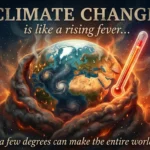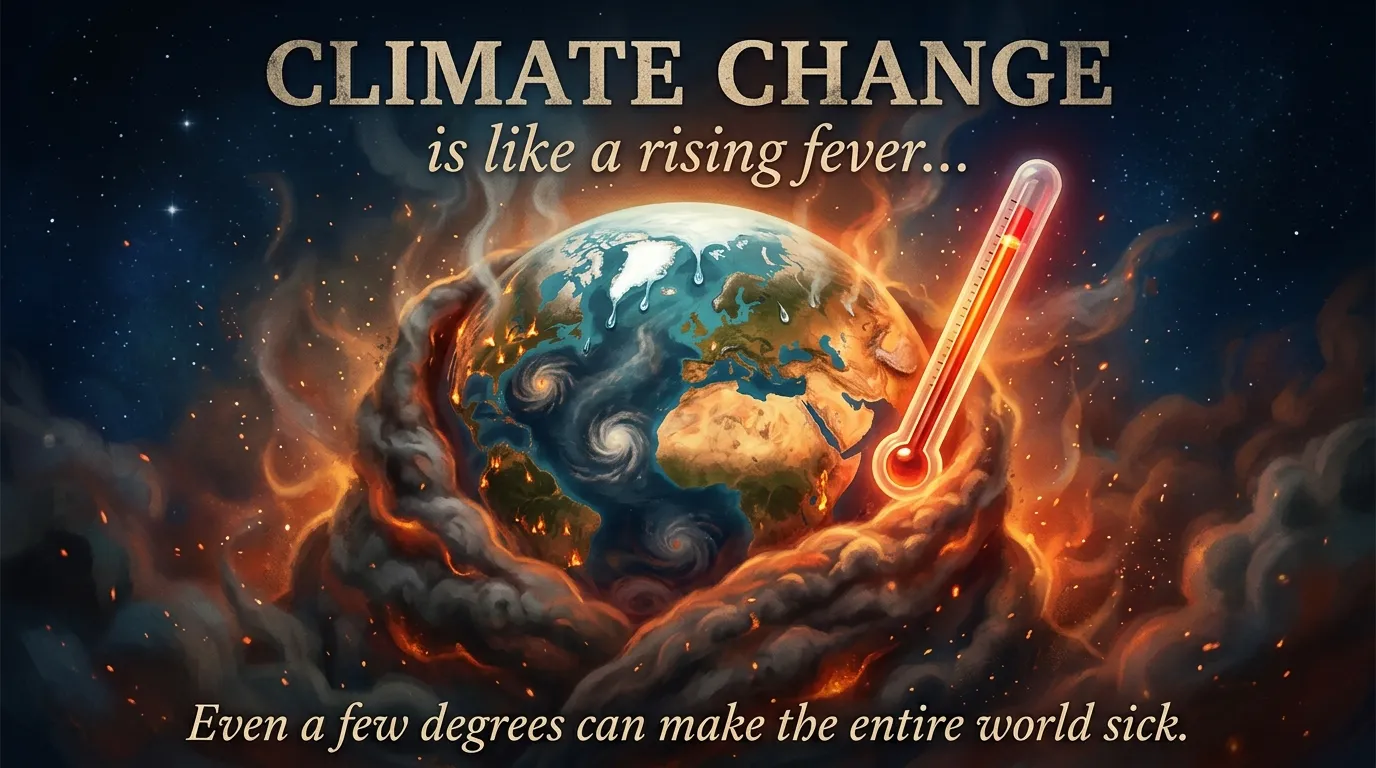
A good simile for climate change is “climate change is like a slow-moving storm,” because its effects build over time and become harder to ignore.
Other strong choices include “the Earth is like a feverish patient,” showing rising temperatures; “glaciers melt like ice cubes in the sun,” describing melting ice; and “the climate is like a broken thermostat,” suggesting a disrupted balance. These comparisons help explain climate change in clear, memorable language.
Climate change can feel like a huge and difficult subject, but a good simile makes it easier to understand.
A simile for climate change compares its causes, effects, or solutions to something familiar. For example, rising temperatures can be compared to a fever, while melting glaciers can resemble ice cream left outside on a hot day.
These comparisons help students explain science, teachers make lessons more engaging, and writers bring environmental stories to life.
This collection includes simple, creative, and modern similes for essays, speeches, poems, classroom projects, and climate awareness campaigns in 2026.
Similes to Describe Climate Change
Similes can describe climate change as a gradual process, a growing danger, or a major change in the natural world. The best comparison depends on the point you want to make. Use gentle images to explain slow changes, powerful images to describe extreme weather, and hopeful images to show how people can protect the planet.
- Like a clock ticking toward a warning: Shows that the risks are growing as time passes.
- Like a crack spreading across glass: Describes how small environmental problems can grow into larger ones.
- Like a blanket trapping heat: Explains how greenhouse gases help warm the Earth.
- Like a river slowly changing its course: Shows how climate patterns can shift over time.
- Like a warning light on a dashboard: Suggests that rising temperatures and other signs need attention.
Similes for the Effects of Climate Change
Climate change affects weather patterns, oceans, wildlife, forests, farms, and communities. Similes make these effects easier to picture without replacing scientific facts. Choose comparisons that match the specific impact you are describing.
- Like a shoreline being erased by an invisible hand: Describes the loss of land as sea levels rise.
- Like a forest holding its breath: Creates an image of nature under heat and drought stress.
- Like a sponge drying in the sun: Suggests how soil can lose moisture during prolonged dry periods.
- Like a drumbeat growing louder: Shows how repeated climate warnings can become harder to ignore.
- Like a puzzle losing its pieces: Describes the disruption of habitats and natural systems.
Similes for Climate Change Awareness and Solutions
Climate writing does not have to focus only on damage. Similes can also explain why preparation, clean energy, conservation, and teamwork matter. Comparisons work best when they encourage action without suggesting that one person or one solution can fix the entire problem alone.
- Like many hands lifting a heavy bridge: Shows how shared effort can support climate action.
- Like planting seeds for a future harvest: Describes the long-term value of protecting nature today.
- Like turning a ship before it reaches rocks: Shows why early action can reduce future risks.
- Like replacing a leaking roof before a storm: Suggests the value of preparing communities for climate impacts.
- Like switching on lights along a dark road: Describes how knowledge and clear plans can guide better choices.
200 Similes for Climate Change (Full List)
The following list includes simple comparisons for schoolwork, fresh images for creative writing, and examples related to everyday life in 2026. Each simile has a meaning and an original example sentence.
1. As unpredictable as a shuffled deck of cards
Meaning: Climate patterns can shift in ways that are difficult to predict exactly.
Example: The changing seasons felt as unpredictable as a shuffled deck of cards.
2. Like a candle burning at both ends
Meaning: The planet is under pressure from several environmental problems at once.
Example: Our warming world seemed like a candle burning at both ends as forests shrank and temperatures rose.
3. As thirsty as a dry sponge
Meaning: Drought can leave land and plants desperately short of water.
Example: After months without rain, the farmland was as thirsty as a dry sponge.
4. Like a snowman standing in a sauna
Meaning: This playful image describes how rising heat threatens snow and ice.
Example: The mountain glacier looked like a snowman standing in a sauna during the unusually warm spring.
5. As restless as waves in a storm
Meaning: The climate system can involve changing and interacting conditions.
Example: Weather patterns seemed as restless as waves in a storm during the changing season.
6. Like a greenhouse with its windows sealed
Meaning: Heat becomes trapped when it cannot escape easily.
Example: The planet felt like a greenhouse with its windows sealed as global temperatures climbed.
7. As fragile as a soap bubble
Meaning: Some ecosystems can be vulnerable to sudden environmental changes.
Example: The delicate wetland was as fragile as a soap bubble after years of shrinking rainfall.
8. Like a giant oven left running
Meaning: This comparison describes the continuing buildup of heat in the atmosphere.
Example: The city felt like a giant oven left running during the record-breaking heat wave.
9. As dry as forgotten bread
Meaning: Long periods without rain can leave soil and plants parched.
Example: The pasture became as dry as forgotten bread during the summer drought.
10. Like a freezer losing power
Meaning: The image suggests that places once known for lasting cold are warming.
Example: The Arctic looked like a freezer losing power as temperatures rose and ice declined.
11. As swollen as a waterlogged sponge
Meaning: Heavy rainfall can saturate soil and increase flood risks.
Example: The valley became as swollen as a waterlogged sponge after days of intense rain.
12. Like a blanket pulled too tightly
Meaning: The atmosphere holds more heat than the climate system can easily release.
Example: Extra greenhouse gases acted like a blanket pulled too tightly around the planet.
13. As brittle as a dried leaf
Meaning: Heat and drought can make plants more vulnerable to damage.
Example: The neglected grass was as brittle as a dried leaf after weeks of scorching weather.
14. Like a bathtub filling without a working drain
Meaning: Water levels rise when more water enters a system than leaves it.
Example: The coastal neighborhood seemed like a bathtub filling without a working drain as the sea crept higher.
15. As hot as a pan left on the stove
Meaning: The comparison conveys intense heat that continues to build.
Example: The playground was as hot as a pan left on the stove by midafternoon.
16. Like a clock running faster than expected
Meaning: Climate impacts may arrive sooner than a community planned for.
Example: The rising cost of flood repairs made climate preparation feel like a clock running faster than expected.
17. As exposed as a house without a roof
Meaning: People without protection or preparation face greater climate risks.
Example: Without shade or cooling centers, the neighborhood was as exposed as a house without a roof.
18. Like a map being redrawn by water
Meaning: Rising seas and flooding can change coastlines and local landscapes.
Example: The changing shoreline looked like a map being redrawn by water.
19. As restless as a fan with a loose blade
Meaning: This image suggests a system that is no longer running smoothly.
Example: The seasonal weather felt as restless as a fan with a loose blade.
20. Like a garden left without a caretaker
Meaning: Nature can suffer when environmental pressures go unmanaged.
Example: The damaged woodland looked like a garden left without a caretaker after years of drought and neglect.
21. As slippery as wet soap
Meaning: Climate risks can be difficult to manage once conditions begin changing quickly.
Example: Planning for repeated floods felt as slippery as wet soap for the unprepared town.
22. Like a train gathering speed downhill
Meaning: Some climate processes can become harder to slow once they gain momentum.
Example: The growing damage to the coastline felt like a train gathering speed downhill.
23. As patchy as a worn-out quilt
Meaning: Climate effects can differ greatly from one region to another.
Example: Rainfall across the country became as patchy as a worn-out quilt.
24. Like a phone overheating during a video call
Meaning: A familiar technology comparison for a system struggling under extra heat.
Example: The city seemed like a phone overheating during a video call as temperatures stayed high.
25. As crowded as a bus at rush hour
Meaning: This comparison describes pressure on limited resources during climate emergencies.
Example: Emergency shelters became as crowded as a bus at rush hour after the flood.
26. Like a bridge bending under too much weight
Meaning: Natural and human systems can struggle when climate pressures become too great.
Example: The farming community was like a bridge bending under too much weight during repeated crop failures.
27. As faded as an old photograph
Meaning: The image suggests landscapes or seasons losing familiar features.
Example: The once-snowy mountain looked as faded as an old photograph after several warm winters.
28. Like a battery draining in the cold
Meaning: Climate stress can weaken the ability of people, wildlife, or systems to cope.
Example: The exhausted rescue crew felt like a battery draining in the cold after days of extreme weather.
29. As parched as a cracked clay pot
Meaning: The simile describes dry, damaged ground.
Example: The riverbank became as parched as a cracked clay pot during the long dry spell.
30. Like a smoke alarm that keeps ringing
Meaning: Repeated climate warnings signal a problem that should not be ignored.
Example: Each new heat record sounded like a smoke alarm that keeps ringing.
31. As restless as a spinning top
Meaning: The image suggests unstable or rapidly changing conditions.
Example: The local weather felt as restless as a spinning top through the unusual spring.
32. Like an umbrella turned inside out
Meaning: Extreme winds can overwhelm things designed to offer protection.
Example: The storm left the town feeling like an umbrella turned inside out.
33. As thin as paper in the rain
Meaning: A vulnerable ecosystem may have little protection against added stress.
Example: The dry forest seemed as thin as paper in the rain when wildfires spread.
34. Like a recipe missing its key ingredient
Meaning: Climate changes can disrupt the conditions plants and animals need to thrive.
Example: The struggling wetland was like a recipe missing its key ingredient after its water supply changed.
35. As relentless as a dripping tap
Meaning: Gradual climate impacts can continue day after day.
Example: The rising repair bills were as relentless as a dripping tap after every flood.
36. Like a seesaw with uneven weights
Meaning: The balance among temperature, rainfall, ice, and oceans can shift.
Example: The changing climate looked like a seesaw with uneven weights as seasonal patterns moved.
37. As pale as a washed-out painting
Meaning: The comparison evokes a landscape losing its usual color and vitality.
Example: The dried grassland looked as pale as a washed-out painting in the summer heat.
38. Like a sponge squeezed until no water remains
Meaning: Long droughts can remove moisture from soil and vegetation.
Example: The reservoir region felt like a sponge squeezed until no water remained.
39. As heavy as a wet winter coat
Meaning: Climate-related costs and stress can weigh on communities.
Example: The burden of rebuilding after each storm felt as heavy as a wet winter coat.
40. Like a classroom with the heater stuck on high
Meaning: The comparison explains uncomfortable heat that cannot be easily controlled.
Example: The school gym felt like a classroom with the heater stuck on high during the heatwave.
41. As scattered as leaves in a gust
Meaning: Climate disruption can spread its effects across many places and systems.
Example: The consequences of the drought were as scattered as leaves in a gust across the region.
42. Like a road melting under a magnifying glass
Meaning: The image conveys intense heat affecting roads and other infrastructure.
Example: The highway shimmered like a road melting under a magnifying glass during the hottest afternoon.
43. As uncertain as a coin spinning on a table
Meaning: The exact timing and local effects of climate events can be uncertain.
Example: The farmers’ planting plans felt as uncertain as a coin spinning on a table.
44. Like a curtain slowly catching fire
Meaning: The comparison suggests a gradual danger that can spread if ignored.
Example: The dry hillside was like a curtain slowly catching fire as the drought continued.
45. As strained as a rope pulled from both ends
Meaning: Ecosystems and communities may face several climate pressures at the same time.
Example: The coastal town felt as strained as a rope pulled from both ends by heat and flooding.
46. Like a river trying to escape its banks
Meaning: Heavy rainfall and flooding can push water beyond its usual path.
Example: The swollen river looked like it was trying to escape its banks after the storm.
47. As brittle as a biscuit left in the sun
Meaning: The comparison describes vegetation or soil becoming dry and easy to damage.
Example: The neglected lawn was as brittle as a biscuit left in the sun.
48. Like a thermostat controlled by a faulty sensor
Meaning: The image suggests a disrupted system struggling to maintain a stable temperature.
Example: The changing seasons felt like a thermostat controlled by a faulty sensor.
49. As endless as a queue at a busy airport
Meaning: Climate recovery can feel slow when problems keep returning.
Example: The list of repairs after repeated storms seemed as endless as a queue at a busy airport.
50. Like a candle flickering in a strong wind
Meaning: The comparison shows how fragile a community or habitat can become under pressure.
Example: The small island’s freshwater supply was like a candle flickering in a strong wind.
51. As parched as an empty birdbath
Meaning: This simile conveys a severe lack of water.
Example: The garden was as parched as an empty birdbath after weeks without rain.
52. Like a sponge soaking up every extra drop
Meaning: Warmer air can hold more moisture, affecting rainfall patterns.
Example: The humid summer air felt like a sponge soaking up every extra drop.
53. As bright as a warning sign at night
Meaning: Climate evidence can become impossible to overlook.
Example: The record temperature stood out as bright as a warning sign at night.
54. Like a zipper opening across the ice
Meaning: The image describes cracks spreading through frozen surfaces.
Example: A long fracture appeared like a zipper opening across the ice.
55. As fragile as a sandcastle near the tide
Meaning: Coastal places can be vulnerable to erosion and rising seas.
Example: The low-lying village seemed as fragile as a sandcastle near the tide.
56. Like a sponge left on a hot windowsill
Meaning: The comparison describes moisture disappearing in persistent heat.
Example: The topsoil dried like a sponge left on a hot windowsill.
57. As crowded as a lifeboat in rough water
Meaning: The simile suggests communities competing for limited safe space during disasters.
Example: The evacuation center became as crowded as a lifeboat in rough water.
58. Like a kite pulled by changing winds
Meaning: Climate conditions can shift direction and affect familiar patterns.
Example: The spring forecast felt like a kite pulled by changing winds.
59. As restless as a browser with too many tabs open
Meaning: The comparison evokes a system handling too many competing pressures.
Example: The city’s infrastructure seemed as restless as a browser with too many tabs open during the heatwave.
60. Like a freezer door left ajar
Meaning: This image suggests that cold environments are losing their ability to stay frozen.
Example: The shrinking ice sheet looked like a freezer door left ajar.
61. As dry as an unwatered flowerpot
Meaning: The simile describes soil that has lost the moisture needed for plants.
Example: The community garden was as dry as an unwatered flowerpot.
62. Like a warning email arriving every morning
Meaning: Repeated climate alerts can become a regular reminder of growing risks.
Example: The weekly flood notices felt like a warning email arriving every morning.
63. As unstable as a chair with a loose leg
Meaning: Climate change can make established environmental patterns less dependable.
Example: The old planting calendar felt as unstable as a chair with a loose leg.
64. Like a puzzle being shaken off the table
Meaning: Climate disruption can upset the relationships among species and habitats.
Example: The damaged ecosystem seemed like a puzzle being shaken off the table.
65. As hot as a laptop running heavy software
Meaning: This modern comparison describes a system becoming overheated under pressure.
Example: The packed city center felt as hot as a laptop running heavy software.
66. Like a beach umbrella in a hurricane
Meaning: A small defense may not be enough against a powerful climate threat.
Example: The town’s weak flood barrier was like a beach umbrella in a hurricane.
67. As stretched as a rubber band near breaking
Meaning: Climate stress can push ecosystems and public services close to their limits.
Example: The emergency response team was as stretched as a rubber band near breaking.
68. Like a calendar with the seasons out of order
Meaning: Climate change can make familiar seasonal timing less reliable.
Example: The warm winter felt like a calendar with the seasons out of order.
69. As slippery as a wet staircase
Meaning: Changing conditions can make planning and adaptation difficult.
Example: Managing water supplies felt as slippery as a wet staircase during the drought.
70. Like a drum losing its steady rhythm
Meaning: The natural timing of seasons and rainfall can change.
Example: The local rainy season sounded like a drum losing its steady rhythm.
71. As exposed as a seed on bare rock
Meaning: Living things may struggle when protective conditions disappear.
Example: The newly planted trees were as exposed as seeds on bare rock during the heatwave.
72. Like a sponge left to dry on a radiator
Meaning: This image shows moisture disappearing under prolonged heat.
Example: The marshland became like a sponge left to dry on a radiator.
73. As tangled as earphones in a pocket
Meaning: Climate problems involve many connected causes and effects.
Example: The relationship between energy use, transport, and emissions seemed as tangled as earphones in a pocket.
74. Like a traffic jam stretching into the distance
Meaning: Climate action can stall when progress is delayed by many obstacles.
Example: Negotiations over climate plans felt like a traffic jam stretching into the distance.
75. As thin as ice on a warm pond
Meaning: The simile describes ice that is becoming less reliable in warming conditions.
Example: The frozen pond was as thin as ice on a warm pond—an image that captured its fragile state.
76. Like a sponge that cannot hold another drop
Meaning: Saturated ground may be unable to absorb more rain, increasing flood risk.
Example: The hillside was like a sponge that could not hold another drop after the downpour.
77. As fierce as a furnace blast
Meaning: The comparison conveys the intensity of extreme heat.
Example: The afternoon wind felt as fierce as a furnace blast across the open field.
78. Like a wall slowly losing its bricks
Meaning: Climate impacts can gradually weaken ecosystems and infrastructure.
Example: The protective wetland looked like a wall slowly losing its bricks as erosion advanced.
79. As thirsty as a marathon runner at the finish line
Meaning: The simile describes an urgent need for water during heat and drought.
Example: The dry orchard was as thirsty as a marathon runner at the finish line.
80. Like a computer fan spinning without rest
Meaning: The comparison suggests a system constantly working under pressure.
Example: The city’s cooling network ran like a computer fan spinning without rest through the heatwave.
81. As changeable as a sky full of fast clouds
Meaning: Weather conditions can shift quickly, even though climate refers to longer-term patterns.
Example: The week’s forecasts seemed as changeable as a sky full of fast clouds.
82. Like a roof leaking in every room
Meaning: Climate risks can affect many parts of society at once.
Example: The storm exposed weaknesses in housing, roads, and power lines like a roof leaking in every room.
83. As brittle as a cracker in the desert
Meaning: The image suggests dryness that makes vegetation or soil easy to break apart.
Example: The dry reeds were as brittle as crackers in the desert.
84. Like a tide that keeps moving the goalposts
Meaning: Rising seas can change the conditions coastal communities must plan around.
Example: The shifting shoreline felt like a tide that kept moving the goalposts.
85. As heavy as a backpack full of stones
Meaning: The simile describes the burden climate damage can place on families and communities.
Example: Rebuilding after the flood felt as heavy as a backpack full of stones.
86. Like a garden watered with a leaky hose
Meaning: Water may be wasted while plants still fail to receive enough.
Example: The irrigation system seemed like a garden watered with a leaky hose during the drought.
87. As confusing as a forecast in a hall of mirrors
Meaning: Climate change can make local expectations based on past patterns less dependable.
Example: The shifting weather seemed as confusing as a forecast in a hall of mirrors.
88. Like a match held beside dry grass
Meaning: Hot, dry conditions can make some landscapes more vulnerable to fire.
Example: The neglected hillside looked like a match held beside dry grass during the heatwave.
89. As stretched as a bridge over a widening gap
Meaning: Climate impacts can put growing pressure on systems designed for older conditions.
Example: The town’s drainage network was as stretched as a bridge over a widening gap.
90. Like a snow globe left beside a heater
Meaning: The comparison evokes a cold landscape changing as temperatures rise.
Example: The snowy valley looked like a snow globe left beside a heater.
91. As relentless as a song stuck on repeat
Meaning: Repeated heatwaves, floods, or droughts can make climate impacts feel never-ending.
Example: The summer heat felt as relentless as a song stuck on repeat.
92. Like a sponge pressed against a dry wall
Meaning: The simile suggests a desperate attempt to move moisture where it is needed.
Example: The struggling trees looked like a sponge pressed against a dry wall during the drought.
93. As vulnerable as a paper boat in rapids
Meaning: The comparison shows how easily an unprepared community can be overwhelmed.
Example: The riverside settlement was as vulnerable as a paper boat in rapids during the flood.
94. Like a puzzle with the picture changing
Meaning: Climate change can alter the conditions that once made ecosystems predictable.
Example: The farmer’s seasonal plan felt like a puzzle with the picture changing.
95. As hot as a car parked in full sun
Meaning: The simile communicates dangerous heat in enclosed or built-up spaces.
Example: The unshaded bus stop was as hot as a car parked in full sun.
96. Like a fan blowing warm air
Meaning: The comparison describes a cooling system that no longer offers enough relief.
Example: The old air conditioner felt like a fan blowing warm air during the heatwave.
97. As uneven as a staircase with missing steps
Meaning: Climate impacts and recovery resources can differ sharply between communities.
Example: The region’s recovery seemed as uneven as a staircase with missing steps.
98. Like a clock losing its hands
Meaning: The image suggests that familiar ways of tracking seasonal time are becoming less useful.
Example: The old planting calendar felt like a clock losing its hands after the spring warmed early.
99. As fragile as a glass ornament in a storm
Meaning: The comparison highlights how vulnerable delicate habitats can be to extreme events.
Example: The nesting ground was as fragile as a glass ornament in a storm.
100. Like a drain blocked during a downpour
Meaning: Water systems can fail when heavy rain overwhelms drainage.
Example: The city streets flooded like a drain blocked during a downpour.
101. As dry as a forgotten riverbed
Meaning: The simile describes a place where water has disappeared.
Example: The village stream became as dry as a forgotten riverbed.
102. Like a window fogging from too much heat and moisture
Meaning: The image evokes changing humidity and uncomfortable conditions.
Example: The greenhouse felt like a window fogging from too much heat and moisture.
103. As unpredictable as a ball bouncing on uneven ground
Meaning: Climate impacts can vary across locations and over time.
Example: The rainfall pattern was as unpredictable as a ball bouncing on uneven ground.
104. Like a rope fraying strand by strand
Meaning: Environmental damage can accumulate gradually until a system weakens.
Example: The coastal habitat was like a rope fraying strand by strand as erosion continued.
105. As crowded as a server during a major livestream
Meaning: The comparison shows how systems can struggle when demand suddenly rises.
Example: The power grid felt as crowded as a server during a major livestream on the hottest evening.
106. Like a battery trying to power too many devices
Meaning: Limited resources may be unable to meet every need during a climate emergency.
Example: The town’s water supply was like a battery trying to power too many devices during the drought.
107. As slippery as a wet football field
Meaning: The image suggests difficult conditions that make ordinary tasks harder.
Example: The muddy recovery site was as slippery as a wet football field after the storm.
108. Like a sand timer with a cracked base
Meaning: The comparison suggests that time and resources are slipping away while the system is damaged.
Example: The town’s delayed flood plan felt like a sand timer with a cracked base.
109. As fragile as a spiderweb in strong wind
Meaning: The simile highlights the vulnerability of interconnected natural systems.
Example: The food chain seemed as fragile as a spiderweb in strong wind after habitats changed.
110. Like a staircase that grows steeper with every step
Meaning: The longer climate action is delayed, the harder some challenges may become.
Example: Preparing the town for rising seas felt like climbing a staircase that grew steeper with every step.
111. As hot as a bakery at midday
Meaning: This familiar comparison conveys strong, lingering heat.
Example: The crowded market was as hot as a bakery at midday during the heatwave.
112. Like a sweater that keeps getting thicker
Meaning: The image describes heat building up instead of escaping.
Example: Extra greenhouse gases made the atmosphere feel like a sweater that kept getting thicker.
113. As dry as chalk dust
Meaning: The simile conveys extremely dry ground or vegetation.
Example: The soil along the path was as dry as chalk dust.
114. Like a river forced through a narrow doorway
Meaning: Heavy water flow can overwhelm restricted channels and cause flooding.
Example: The floodwater rushed through the streets like a river forced through a narrow doorway.
115. As exposed as a book left in the rain
Meaning: The comparison suggests that unprotected people or places can suffer rapid damage.
Example: The temporary shelters were as exposed as books left in the rain during the storm.
116. Like a zipper stuck halfway closed
Meaning: The image suggests a process that has begun but is not moving smoothly.
Example: The region’s shift to cleaner transport felt like a zipper stuck halfway closed.
117. As strained as a phone charger pulled too tight
Meaning: Climate stress can stretch existing systems beyond their intended capacity.
Example: The city’s electricity network was as strained as a phone charger pulled too tight during the heatwave.
118. Like a picnic blanket under a leaking cloud
Meaning: The comparison evokes plans disrupted by changing weather.
Example: The outdoor festival felt like a picnic blanket under a leaking cloud when heavy rain arrived.
119. As thin as a shadow at noon
Meaning: The image suggests a shrinking margin of safety in a changing environment.
Example: The village’s water reserves were as thin as a shadow at noon after months without rain.
120. Like a wheel spinning in loose gravel
Meaning: Climate planning can struggle to make progress without stable support.
Example: The city’s adaptation project felt like a wheel spinning in loose gravel as funding stalled.
121. As hot as a stadium under floodlights
Meaning: The simile conveys intense heat in a large, exposed area.
Example: The open sports ground was as hot as a stadium under floodlights on a scorching afternoon.
122. Like a clock whose alarm keeps coming earlier
Meaning: The timing of familiar seasonal events may shift.
Example: The early blossom season felt like a clock whose alarm kept coming earlier.
123. As fragile as a dried flower pressed between pages
Meaning: The comparison describes something delicate that may not recover easily from stress.
Example: The rare alpine plants seemed as fragile as dried flowers pressed between pages.
124. Like a bucket with a hole in the bottom
Meaning: Water or other resources are lost faster than they can be replaced.
Example: The drought-stricken reservoir felt like a bucket with a hole in the bottom as demand continued.
125. As restless as a washing machine off balance
Meaning: The image suggests a system shaking because its parts are no longer balanced.
Example: The seasonal weather felt as restless as a washing machine off balance.
126. Like a traffic light stuck on red
Meaning: The comparison describes stalled progress on climate solutions.
Example: The clean-energy project seemed like a traffic light stuck on red while permits were delayed.
127. As thirsty as a cracked flowerpot
Meaning: The simile conveys the urgent need for water in dry conditions.
Example: The community orchard was as thirsty as a cracked flowerpot during the dry spell.
128. Like a blanket with holes in the wrong places
Meaning: The comparison suggests that climate conditions no longer provide the expected protection or balance.
Example: The region’s old weather patterns felt like a blanket with holes in the wrong places.
129. As heavy as a storm cloud over a small town
Meaning: The image conveys the emotional weight of a looming climate threat.
Example: The forecast of another flood hung as heavy as a storm cloud over the small town.
130. Like a dam holding back a growing lake
Meaning: The comparison suggests increasing pressure on a protective barrier.
Example: The old sea wall stood like a dam holding back a growing lake as tides climbed.
131. As bright as a screen at full brightness in a dark room
Meaning: Climate evidence can stand out clearly against everyday assumptions.
Example: The temperature chart was as bright as a screen at full brightness in a dark room.
132. Like a garden clock running out of time
Meaning: The image suggests that plants and ecosystems may face shrinking windows for growth.
Example: The unusual spring heat made the garden feel like a clock running out of time.
133. As delicate as a paper lantern in the wind
Meaning: The simile emphasizes the vulnerability of communities and habitats to extreme conditions.
Example: The island’s fragile dunes were as delicate as paper lanterns in the wind.
134. Like a road sign hidden by thick fog
Meaning: Climate uncertainty can make it harder to see the best path forward.
Example: Without clear local data, the city’s climate plan seemed like a road sign hidden by thick fog.
135. As persistent as sand in your shoes
Meaning: Climate effects can remain long after an event has passed.
Example: The damage left by repeated coastal floods was as persistent as sand in your shoes.
136. Like a phone that never reaches one hundred percent
Meaning: Recovery may remain incomplete when problems keep returning.
Example: The community’s rebuilding effort felt like a phone that never reached one hundred percent after each new storm.
137. As uneven as a patchwork road
Meaning: Climate risks and protections vary across neighborhoods and regions.
Example: The city’s heat protection was as uneven as a patchwork road, with some areas lacking trees.
138. Like a tap dripping into an already full sink
Meaning: Even small additions can cause overflow when a system is already under pressure.
Example: Another day of heavy rain felt like a tap dripping into an already full sink.
139. As brittle as a dry twig underfoot
Meaning: The simile conveys how easily drought-stressed vegetation can break.
Example: The scrubland was as brittle as a dry twig underfoot after the hottest month on record.
140. Like a spinning wheel that has lost its center
Meaning: The image suggests that a system is no longer stable or well balanced.
Example: The changing seasons felt like a spinning wheel that had lost its center.
141. As hot as a sidewalk beside a running engine
Meaning: This comparison describes the extra heat felt around roads and machinery.
Example: The city pavement was as hot as a sidewalk beside a running engine.
142. Like a fishing net full of holes
Meaning: The image suggests an ecosystem losing the connections that help it function.
Example: The marine food web seemed like a fishing net full of holes as species moved away.
143. As uncertain as a paper plane in a crosswind
Meaning: The simile shows how changing conditions can upset a planned course.
Example: The farmer’s growing schedule was as uncertain as a paper plane in a crosswind.
144. Like a zipper pulling apart on an old coat
Meaning: The comparison depicts a protective system gradually coming undone.
Example: The coastal barrier looked like a zipper pulling apart on an old coat as sections failed.
145. As thirsty as a sponge on a windowsill
Meaning: The image suggests plants and soil losing water during prolonged dry weather.
Example: The roadside trees were as thirsty as sponges on a windowsill during the heatwave.
146. Like a school bell ringing in an empty building
Meaning: Climate warnings can go unanswered when people fail to respond.
Example: The scientist’s repeated alerts felt like a school bell ringing in an empty building.
147. As crowded as a lifeboat at sea
Meaning: The simile describes limited safe space during a climate emergency.
Example: The evacuation center became as crowded as a lifeboat at sea after the coastal storm.
148. Like a roof trying to cover a growing house
Meaning: Old protections may no longer fit changing environmental risks.
Example: The town’s outdated drainage system was like a roof trying to cover a growing house.
149. As restless as a kite in shifting air
Meaning: The comparison evokes changing wind and weather conditions.
Example: The autumn weather was as restless as a kite in shifting air.
150. Like a sponge full of holes
Meaning: A landscape may struggle to retain water when its soil and vegetation are damaged.
Example: The degraded hillside acted like a sponge full of holes after the rain.
151. As hot as a kitchen with every burner on
Meaning: The simile conveys heat that feels intense and difficult to escape.
Example: The crowded apartment was as hot as a kitchen with every burner on during the heatwave.
152. Like a slow leak in an inflatable boat
Meaning: Small, ongoing losses can become dangerous if no one fixes them.
Example: The steady loss of coastal land was like a slow leak in an inflatable boat.
153. As dry as a forgotten well
Meaning: The image suggests water supplies that have run dangerously low.
Example: The village’s old well was as dry as a forgotten well after months without rain.
154. Like a thermostat hidden behind a curtain
Meaning: The comparison suggests that people may overlook the causes of changing temperatures.
Example: The role of greenhouse gases felt like a thermostat hidden behind a curtain until the data became clear.
155. As fragile as a bridge made of ice
Meaning: The simile shows how easily a vulnerable system can fail under pressure.
Example: The winter road across the frozen lake was as fragile as a bridge made of ice.
156. Like a calendar losing its familiar colors
Meaning: The comparison evokes seasons that no longer match people’s expectations.
Example: The local farming year felt like a calendar losing its familiar colors as winters grew warmer.
157. As relentless as a treadmill set too fast
Meaning: Climate impacts can feel exhausting when people cannot catch up with repeated damage.
Example: Rebuilding after every storm was as relentless as a treadmill set too fast.
158. Like a phone battery in extreme heat
Meaning: The simile suggests that heat can make already stressed systems less reliable.
Example: The emergency communication equipment felt like a phone battery in extreme heat during the long outage.
159. As uneven as sunlight through broken blinds
Meaning: Climate impacts can be distributed unevenly across places and populations.
Example: Access to cooling was as uneven as sunlight through broken blinds across the city.
160. Like a dam made from playing cards
Meaning: The image describes a defense that may not withstand a powerful threat.
Example: The town’s temporary flood barrier looked like a dam made from playing cards before the storm.
161. As thirsty as a field of young seedlings
Meaning: The simile conveys how crops depend on steady access to water.
Example: The new wheat field was as thirsty as a field of young seedlings during the dry spell.
162. Like a road that keeps washing away
Meaning: Repeated floods and erosion can make infrastructure difficult to maintain.
Example: The mountain route was like a road that kept washing away after each heavy storm.
163. As strained as a bridge during rush hour
Meaning: Climate events can put heavy demands on transport and emergency systems.
Example: The evacuation roads were as strained as a bridge during rush hour when the flood warning arrived.
164. Like a garden under a heat lamp that never switches off
Meaning: The image describes constant heat that gives plants little time to recover.
Example: The vegetable patch looked like a garden under a heat lamp that never switched off.
165. As fragile as a paper crown in the rain
Meaning: The comparison highlights how easily weak protections can fail in severe weather.
Example: The temporary shelter was as fragile as a paper crown in the rain.
166. Like a river trying to fit through a straw
Meaning: The simile depicts too much water trying to move through a limited channel.
Example: Floodwater poured through the narrow culvert like a river trying to fit through a straw.
167. As dry as a paintbrush left out overnight
Meaning: The comparison conveys moisture loss that leaves something stiff and unusable.
Example: The soil in the neglected planter was as dry as a paintbrush left out overnight.
168. Like a smoke detector with a dying battery
Meaning: Climate warnings may be easy to dismiss when they are poorly communicated or repeatedly ignored.
Example: The community’s early-warning system was like a smoke detector with a dying battery before the flood.
169. As changeable as a playlist on shuffle
Meaning: The image suggests that weather patterns may no longer follow familiar expectations.
Example: The spring forecast felt as changeable as a playlist on shuffle.
170. Like a crowded inbox with every message marked urgent
Meaning: The comparison describes the many climate problems competing for attention.
Example: The town’s list of climate risks felt like a crowded inbox with every message marked urgent.
171. As hot as a greenhouse at noon
Meaning: The simile conveys the heat that can build up in a sunlit, enclosed space.
Example: The glass bus shelter was as hot as a greenhouse at noon.
172. Like a rope bridge swaying over a canyon
Meaning: The comparison suggests uncertainty when a community’s safety depends on a vulnerable system.
Example: The village’s water supply felt like a rope bridge swaying over a canyon during the drought.
173. As dry as a cracker in a desert tent
Meaning: This image emphasizes extreme dryness.
Example: The grass around the farmhouse was as dry as a cracker in a desert tent.
174. Like a clock with a slipping gear
Meaning: The simile describes seasonal patterns that no longer keep their old rhythm.
Example: The arrival of spring felt like a clock with a slipping gear.
175. As vulnerable as a tent in a gale
Meaning: The image conveys how exposed people or structures can be to powerful storms.
Example: The temporary camp was as vulnerable as a tent in a gale when the wind strengthened.
176. Like a sponge trying to fill a swimming pool
Meaning: The comparison describes a small resource struggling to meet a huge demand.
Example: The limited reservoir seemed like a sponge trying to fill a swimming pool during the drought.
177. As heavy as a sky full of rain
Meaning: The simile captures the sense of an approaching threat.
Example: The flood warning felt as heavy as a sky full of rain over the village.
178. Like a puzzle with too many moving pieces
Meaning: Climate planning can be difficult because many factors affect one another.
Example: Preparing the coast for rising seas felt like a puzzle with too many moving pieces.
179. As restless as a sailboat in shifting winds
Meaning: The image suggests that conditions keep changing direction.
Example: The local weather was as restless as a sailboat in shifting winds throughout the week.
180. Like a bucket carried up a hill with a hole in it
Meaning: The simile shows how hard it is to make progress while resources keep being lost.
Example: Repairing the damaged farmland felt like carrying a bucket up a hill with a hole in it.
181. As hot as a phone left on a dashboard
Meaning: The comparison describes the intense heat that can build in a sunlit place.
Example: The unshaded playground was as hot as a phone left on a dashboard.
182. Like a staircase disappearing into fog
Meaning: The image suggests an uncertain path toward climate safety.
Example: The town’s long-term planning felt like a staircase disappearing into fog after another record-breaking season.
183. As brittle as dry grass beneath a boot
Meaning: The simile describes vegetation made fragile by drought.
Example: The field was as brittle as dry grass beneath a boot after weeks of heat.
184. Like a river changing its handwriting
Meaning: The image suggests that familiar waterways and rainfall patterns are changing their shape.
Example: The shifting river channel looked like a river changing its handwriting across the valley.
185. As exposed as a candle in a wind tunnel
Meaning: The comparison shows how little protection something has against strong forces.
Example: The small coastal settlement was as exposed as a candle in a wind tunnel during the cyclone.
186. Like a server struggling under too many requests
Meaning: Climate emergencies can overwhelm public services and infrastructure.
Example: The city’s emergency hotline acted like a server struggling under too many requests during the flood.
187. As dry as a river stone left on a shelf
Meaning: The simile evokes a waterway that has been dry for a long time.
Example: The old creek bed was as dry as a river stone left on a shelf.
188. Like a blanket pulled away in the middle of winter
Meaning: The image suggests losing protection that people or wildlife depend on.
Example: The sudden loss of sea ice felt like a blanket pulled away in the middle of winter for animals that rely on it.
189. As uneven as a field after a hailstorm
Meaning: Climate impacts can leave some areas far more damaged than others.
Example: The harvest was as uneven as a field after a hailstorm following a season of unusual weather.
190. Like a light switch that keeps flickering
Meaning: The comparison suggests unstable conditions that alternate unexpectedly.
Example: The region’s weather felt like a light switch that kept flickering between heat and heavy rain.
191. As strained as a net holding a heavy catch
Meaning: The image describes a system carrying more pressure than it was built for.
Example: The drainage network was as strained as a net holding a heavy catch during the downpour.
192. Like a calendar written in disappearing ink
Meaning: The simile suggests that old seasonal expectations are becoming less dependable.
Example: The farmer’s traditional planting dates felt like a calendar written in disappearing ink.
193. As fragile as a sand path beside the surf
Meaning: The comparison conveys how easily coastlines can be reshaped by water.
Example: The narrow coastal trail was as fragile as a sand path beside the surf.
194. Like a phone trying to update with no signal
Meaning: The image suggests that progress is difficult when essential support is missing.
Example: The community’s climate plan felt like a phone trying to update with no signal while funding remained uncertain.
195. As hot as a car interior after a long drive
Meaning: The simile conveys heat that builds up and lingers.
Example: The crowded classroom was as hot as a car interior after a long drive.
196. Like a dam with a growing crack
Meaning: The comparison describes a protective system becoming more vulnerable over time.
Example: The aging flood barrier looked like a dam with a growing crack as the river rose.
197. As uncertain as a kite without a string
Meaning: The image suggests losing control or direction in changing conditions.
Example: The community’s recovery plan felt as uncertain as a kite without a string after the second flood.
198. Like a garden trying to bloom in an oven
Meaning: The simile shows how extreme heat can make healthy growth difficult.
Example: The vegetable garden looked like it was trying to bloom in an oven during the hottest week.
199. As fragile as a bridge made from dry twigs
Meaning: The comparison emphasizes a weak structure that may fail under pressure.
Example: The temporary walkway over the flooded ditch was as fragile as a bridge made from dry twigs.
200. Like a planet asking for a quieter footprint
Meaning: This creative simile suggests that human activity should put less pressure on Earth’s systems.
Example: The climate campaign described the Earth as a planet asking for a quieter footprint through cleaner energy and less waste.
How to Use These Similes in Your Writing
A simile works best when it makes an idea easier to picture. Use these tips to make your climate writing clear, original, and meaningful.
1. Choose a simile that fits your point. Use a heat comparison when writing about rising temperatures.
Example: “The city felt like a giant oven during the summer heatwave.”
2. Explain the meaning after the comparison. This helps readers understand the science behind your image.
Example: “The atmosphere was like a thick blanket, trapping more heat near the Earth’s surface.”
3. Use simple language for school essays. Familiar objects make climate change easier to explain.
Example: “The dry field was like a sponge that had lost all its water.”
4. Use fresh comparisons in stories and poems. A new image can help readers connect emotionally with the subject.
Example: “The forest stood like a tired guard beneath the burning sky.”
5. Match the tone to your audience. A classroom presentation may need a clear comparison, while a poem can use a more imaginative one.
Example: “The changing seasons were like a clock that had forgotten its rhythm.”
6. Keep facts separate from figurative language. A simile helps explain an idea, but it does not replace scientific evidence.
Example: “The glacier melted like an ice cube in the sun, showing how rising temperatures can threaten frozen landscapes.”
FAQs:
What is a good simile for climate change?
“Climate change is like a slow-moving storm” is a strong choice because it suggests a problem that develops over time and can cause widespread damage. You can also compare it to a feverish patient to describe rising global temperatures.
What are some similes to describe the effects of climate change?
You could say that drought-stricken land is “as dry as a forgotten riverbed” or that floodwater moves “like a river trying to escape its banks.” These images help readers picture the effects of heat, drought, and heavy rainfall.
How do you describe global warming using a simile?
You can describe global warming as “like a giant oven left running” or “like a blanket pulled too tightly around the Earth.” Both comparisons help explain the buildup of heat, though scientific explanations should clarify that greenhouse gases affect how energy moves through the atmosphere.
What is a creative simile for climate change?
“Climate change is like a calendar written in disappearing ink” is a creative option. It suggests that familiar seasonal patterns are becoming less reliable and that people may need to rethink old expectations.
How can I use a climate change simile in an essay?
Choose a comparison that supports your main point, explain what it means, and connect it to a fact or example. For instance, you could compare a warming city to an oven, then discuss how heat waves affect people, buildings, and public health.
What is the difference between a simile and a metaphor about climate change?
A simile uses words such as like or as to compare two things. A metaphor describes one thing as another directly. “The climate is like a broken clock” is a simile, while “The climate is a broken clock” is a metaphor.
Why are similes useful when writing about climate change?
Similes turn complex ideas into images readers can understand and remember. They are useful in school assignments, speeches, poems, articles, and awareness campaigns, especially when paired with accurate information about climate science.
Conclusion:
The best simile for climate change makes a complex issue easier to picture without losing its meaning. You can compare rising heat to an oven, changing seasons to a faulty clock, or climate action to turning a ship before it reaches danger.
Choose two or three comparisons from this list and try them in an essay, poem, classroom activity, or awareness message. A clear image can help readers understand why protecting the planet matters.

Hi, I’m Nathan Foster. I’m passionate about words, their meanings, and the different ways we use them in everyday communication. I enjoy explaining unfamiliar words in simple English so readers can understand them without confusion.
At SimiliezMeta.com, I focus on word meanings, definitions, synonyms, antonyms, and useful examples that show how words work in real sentences. I believe learning a new word should be simple, practical, and helpful for everyday life.