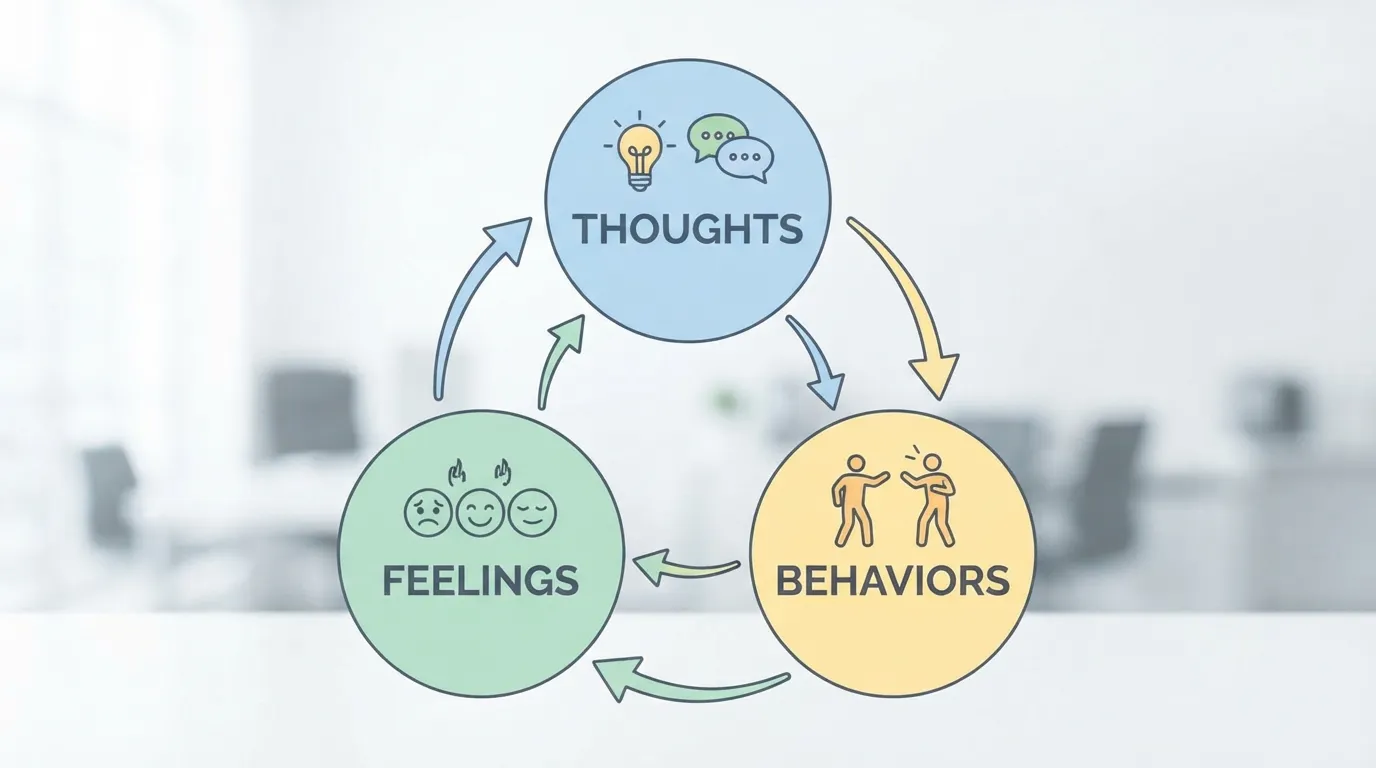
If you have searched for cbt meaning, you may want to know what these three letters mean. CBT usually stands for cognitive behavioral therapy. It is a type of talk therapy that helps people understand their thoughts, feelings, and actions.
The main idea is simple. What you think can affect how you feel. How you feel can affect what you do. CBT helps people notice harmful thought patterns and learn better ways to deal with problems.
This type of therapy is used for many mental health problems. These include anxiety, depression, panic, fears, and other concerns. In this guide, you will learn what CBT means, how it works, where it is used, and what CBT sessions may include.
What Does CBT Mean?
Cognitive behavioral therapy is a type of therapy that helps people notice unhelpful thoughts and actions. It teaches them to replace these patterns with more helpful ways of thinking and acting.
CBT meaning
For example, a person may make one small mistake and think, “I always fail.” That thought may make them feel sad or worried. They may then stop trying.
CBT helps the person look at that thought more closely. They may learn to say, “I made a mistake, but that does not mean I always fail.”
The goal is not to think only positive thoughts. The goal is to look at a situation in a more fair and realistic way.
How Does CBT Work?
CBT looks at the link between thoughts, feelings, and actions.
Imagine that you have to speak in front of a group. You may think, “Everyone will laugh at me.” This thought can make you feel nervous. You may then avoid speaking.
A therapist can help you look at this thought. You may ask:
- Is this thought always true?
- What facts support it?
- What facts do not support it?
- Is there another way to see the situation?
- What would I tell a friend in the same situation?
You may also practice new actions. Instead of avoiding every speaking task, you may slowly practice speaking in safe situations.
Over time, these new skills can help you deal with difficult situations in a different way.
CBT can be different for each person. A therapist chooses methods based on the person’s needs and goals.
What Is CBT Used For?
CBT is used for many mental health concerns. It is often used to help people with anxiety and depression.
It can also be used for problems such as:
- Panic disorder
- Phobias
- Social anxiety
- Obsessive-compulsive disorder (OCD)
- Some trauma-related problems
- Other mental health concerns
For anxiety, CBT may help a person understand fearful thoughts. It may also help them slowly face things they fear.
For depression, it may help a person notice negative thoughts and unhealthy habits. It can also help them take small steps toward daily activities.
CBT does not work in exactly the same way for everyone. A mental health professional can help decide which type of treatment may be useful.
Common CBT Techniques
CBT uses several simple tools. The tools used can depend on the person’s problem.
Changing Unhelpful Thoughts
People sometimes have thoughts that are too negative or extreme.
For example:
“I made one mistake, so I am a failure.”
A therapist may help the person look at the facts. A more balanced thought could be:
“I made a mistake, but I can learn from it.”
This does not mean ignoring problems. It means looking at them in a fair way.
Changing Behaviors
Actions can also affect how we feel.
For example, someone who feels very low may stop doing things they enjoy. A therapist may help them start with small activities.
Taking a short walk, calling a friend, or finishing one simple task may be a useful first step.
Exposure
Exposure is used for some fears and anxiety problems.
A person may slowly face something they fear instead of avoiding it all the time. This is usually done in a safe and planned way.
For example, someone with a strong fear of dogs may start by looking at pictures of dogs. Later, they may watch a dog from a distance.
The steps depend on the person and the type of fear.
Problem-Solving
CBT can also teach people how to solve problems.
A person may first name the problem. Then they can think of possible solutions, choose one, and try it.
This can make a large problem feel easier to manage.
CBT vs. Other Types of Therapy
CBT is one type of psychotherapy. It is not the name for all forms of therapy.
Different types of therapy have different goals and methods.
| Type of therapy | Main focus |
| CBT | Thoughts, feelings, and actions |
| Exposure therapy | Facing fears in a planned way |
| DBT | Emotions, coping skills, and relationships |
| Interpersonal therapy | Relationships and social problems |
| Psychodynamic therapy | Emotional patterns and past experiences |
Some types of therapy can overlap.
For example, exposure is often used as part of CBT for certain anxiety problems. A therapist may also use more than one type of treatment when it fits a person’s needs.
The best approach can depend on the person’s problem, goals, and situation.
Common Misunderstandings About CBT
One common myth is that CBT means “just think positive.” That is not what it means.
CBT does not ask people to ignore problems or pretend that everything is good.
Instead, it helps people look at their thoughts and ask if those thoughts are fair and supported by facts.
Another misunderstanding is that CBT is only talking.
Talking is part of therapy, but CBT may also include exercises and practice. A person may have a task to try between sessions.
Some people also think CBT is exactly the same for everyone. It is not.
Therapists can use different CBT tools based on the person’s needs. Treatment may also change as the person makes progress.
Is CBT a Type of Talk Therapy?
Yes. CBT is a type of talk therapy, also called psychotherapy.
During therapy, a person talks with a trained mental health professional about their problems and goals. The therapist may help them understand their thoughts and actions.
CBT is often structured. This means sessions may have a clear goal or topic.
A person may learn a new skill during a session and then practice it outside the session.
CBT can also be provided online in some cases. This may happen through video sessions or other forms of telehealth.
The length of therapy can vary. Some people may have a shorter course of treatment, while others may need longer support.
What Does a CBT Session Look Like?
A CBT session often focuses on a current problem.
For example, a person may talk about stress they felt during the week. The therapist may ask what happened, what the person thought, how they felt, and what they did next.
Together, they may look for patterns.
The therapist may then teach a skill or suggest an exercise to practice before the next session.
A session may include:
- Talking about a current problem
- Looking at thoughts and feelings
- Finding unhelpful patterns
- Learning a new skill
- Making a small goal
- Practicing the skill later
The exact session can be different for each person.
FAQs:
What does CBT stand for?
CBT stands for cognitive behavioral therapy. It is a type of psychotherapy that looks at thoughts, feelings, and behaviors.
Is CBT only for anxiety?
No. CBT can be used for anxiety, depression, phobias, panic problems, OCD, and other mental health concerns.
Does CBT mean positive thinking?
No. CBT is not about forcing yourself to think positively. It focuses on looking at thoughts in a more balanced and realistic way.
Can CBT be done online?
Yes. Some therapists provide CBT through online or telehealth sessions. The available options depend on the therapist and the person’s needs.
How long does CBT take?
There is no single answer. The length can depend on the problem, treatment plan, progress, and personal needs.
Conclusion:
The term cognitive behavioral therapy refers to a type of talk therapy that connects thoughts, feelings, and actions. It helps people notice unhelpful patterns and practice better ways to handle problems.
CBT is used for several mental health concerns, including anxiety and depression. If you are thinking about therapy, a qualified mental health professional can explain whether this approach may fit your needs.

Hello, I am Ethan Carter a dedicated content creator and storyteller with expertise in literary techniques and language learning. At similiezmeta.com, my crafts engaging articles on similes, idioms, and figurative language designed specifically for children and beginners.