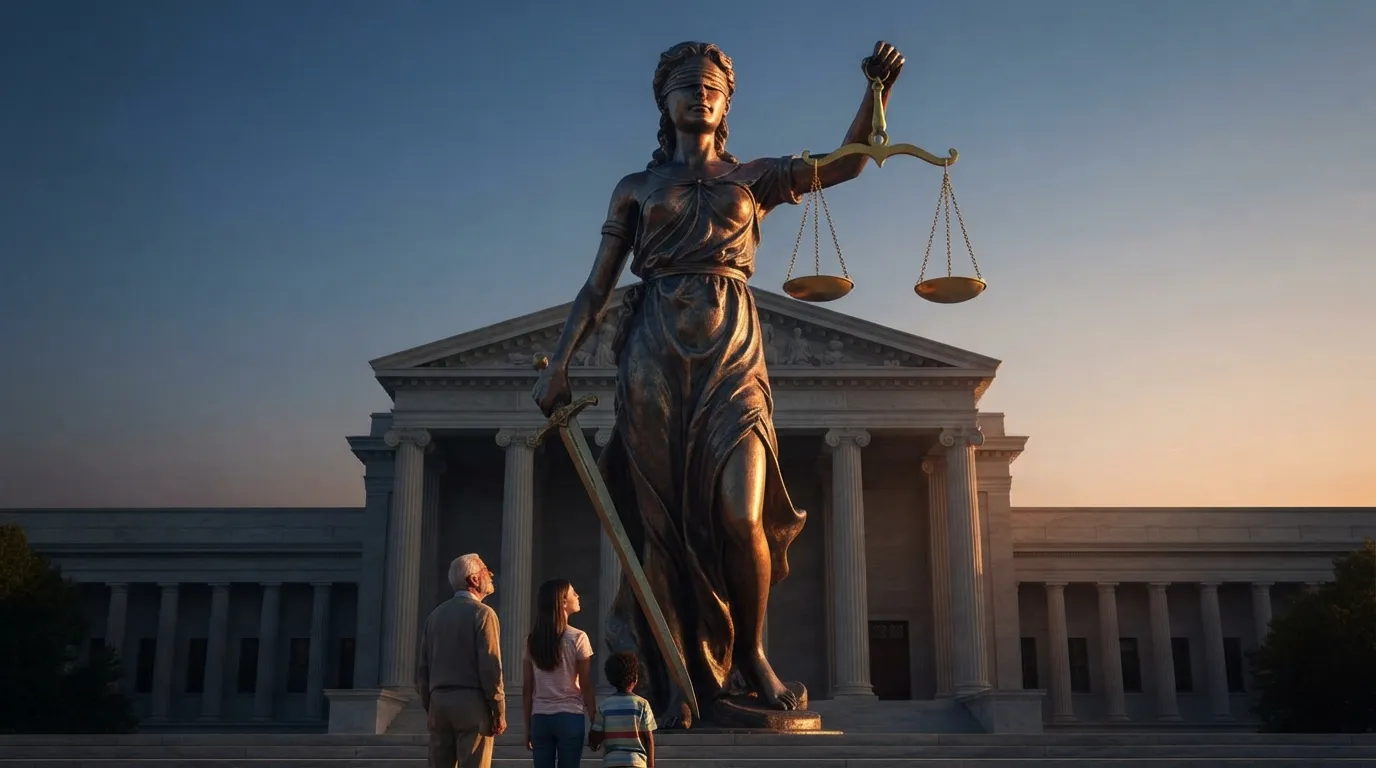
Justice meaning is about fair and right treatment. It means treating people fairly and giving them what they deserve based on the facts and rules.
We see this idea in daily life, schools, jobs, and courts. For example, a teacher may hear both sides of a problem before making a choice.
The word can also have a legal meaning. Courts use laws and facts to make decisions. The term can also describe a judge in some courts.
In this guide, you will learn what the word means, how people use it, and how it differs from fairness, equality, and revenge.
Definition and Meaning
Justice meaning is the idea of treating people in a fair and right way. It can mean following fair rules, protecting rights, fixing harm, or giving a proper response to a wrong.
In simple words, justice means doing what is fair and right.
The exact meaning can change based on the situation. In daily life, it often means fair treatment. In law, it can mean the fair use of laws and legal rules.
Cornell Law School’s Legal Information Institute explains justice as an idea linked to fair and impartial treatment. It also uses the term in a legal sense.
What Does Justice Mean in Everyday Life?
In daily life, justice means treating people fairly.
For example, two children may have a fight at school. A teacher should hear both children before making a choice.
The same idea can apply at work. A manager may listen to both workers before deciding who broke a rule.
Justice does not always mean giving everyone the exact same thing. The facts may be different in each case.
Here are some simple examples:
- Giving people a fair chance.
- Listening to both sides.
- Following the same rule for similar cases.
- Returning something that was taken by mistake.
- Fixing an unfair decision.
- Protecting someone’s rights.
The main idea is simple. People should not be treated unfairly because of personal likes, dislikes, or bias.
Justice in Law
In law, justice is tied to fair use of the law.
A court looks at facts, evidence, and legal rules. The people in a case also get a chance to give their side.
The goal is not just to punish someone. The legal system also helps solve disputes, protect rights, and give legal remedies.
The term justice system can refer to the groups and places that help apply the law. These can include courts, police, and correctional agencies.
The law also uses the word in the name of some judges.
For example, members of the U.S. Supreme Court are called justices. The title is used for a person who holds a certain judicial office.
What Does “Justice” Mean as a Title?
The word can be a job title for a judge.
For example, the members of the U.S. Supreme Court are called justices. The title shows that the person holds a judicial office.
So, when you see the word in a court setting, it may not mean fairness. It may simply refer to a judge.
Justice vs. Fairness vs. Equality
Justice, fairness, and equality are close in meaning. But they are not the same.
| Word | Simple meaning | Example |
| Justice | Fair and proper treatment | A court follows the law fairly |
| Fairness | Treating people in a fair way | A teacher hears both sides |
| Equality | Giving people the same treatment | All students get the same test time |
| Equity | Considering people’s different needs | A student gets help for a special need |
Equality often means giving people the same thing.
Justice can mean looking at the facts before deciding what is fair.
For example, two people may have very different needs. Giving them the exact same help may be equal, but it may not always be the fairest choice.
This is why these words can have different uses.
How People Use the Word
People use the word in many settings.
It can be used when talking about a personal problem, a court case, or a social issue.
Here are some examples:
“She wanted justice for her family.”
This means she wanted a fair response to something she believed was wrong.
“The judge wanted to make a fair decision.”
This refers to a court case and the use of law and facts.
“They are working for social justice.”
This can mean working for fair treatment, rights, or equal chances in society.
“Justice was served.”
This phrase often means that a wrong was dealt with in what people see as a fair way.
The word can sound serious. That is because it is often used when people talk about rights, harm, rules, or wrong actions.
Justice Does Not Mean Revenge
Justice and revenge have different meanings.
Revenge means trying to hurt someone because they hurt you. It is usually about paying someone back.
Justice is different. It focuses on a fair response to a wrong.
For example, imagine someone damages your car.
Damaging their car in return would be revenge. Reporting the damage and seeking a lawful solution would be a different response.
A legal system is designed to deal with crimes through laws and legal processes. It is not based on people taking private revenge.
This is an important difference.
Revenge asks, “How can I hurt this person back?”
Justice asks, “What is a fair and proper response?”
Common Phrases With Justice
The word appears in many common phrases.
Social Justice
Social justice is a term used when people talk about fair treatment and rights in society.
It may involve topics such as equal chances, rights, or unfair treatment.
Criminal Justice
Criminal justice refers to the system used to deal with crime.
It includes laws, courts, legal procedures, and other parts of the system that respond to criminal acts.
Justice System
The justice system includes groups and agencies that help apply the law.
Courts are an important part of this system. Other parts can include law enforcement and correctional agencies.
Miscarriage of Justice
A miscarriage of justice means a serious failure that leads to an unfair result in a legal case.
For example, an innocent person being wrongly convicted can be described as a miscarriage of justice.
Examples of Justice
Simple examples can make the idea easier to understand.
At school:
A teacher listens to both students before deciding what happened.
At work:
A manager applies the same work rule to people in similar situations.
In court:
A judge looks at the facts and law before making a decision.
In a dispute:
A person may receive money to cover a loss caused by another person’s actions when the law allows it.
Each example has the same basic idea. A person is treated in a fair way based on the facts, rules, rights, or duties involved.
Why Justice Matters
Justice matters because people need fair rules and fair treatment.
Without fair rules, people may feel that decisions depend on power, money, or personal bias.
A fair process gives people a chance to explain their side. It can also help solve conflicts without personal revenge.
Justice is not always simple. Two people may look at the same case and disagree about what the fair result should be.
That is why courts and other legal systems use laws, evidence, and set procedures when handling many disputes.
The main idea stays the same: people should be treated fairly, and wrongs should be handled in a proper way.
Meaning of Justice for Kids
For kids, justice means being treated fairly. It means listening to everyone, following the same fair rule, and fixing a mistake when something unfair happens. For example, if two children argue over a game, a fair adult listens to both children before deciding what to do.
Justice in a Sentence
Here are simple sentences that use the word correctly: “The teacher gave both students a fair hearing, so justice was done.” “Justice means that the same rule applies to everyone.” “After hearing the evidence, the court delivered justice.” Each sentence shows fair treatment or a fair decision, not revenge.
Seek Justice Meaning
To seek justice means to try to get a fair outcome after a wrong. A person may report the problem, ask for a fair hearing, or use a lawful process to fix it. Seeking justice is about asking for a fair result, not taking revenge. To deliver justice means to give that fair outcome after hearing the facts.
Justice for Someone Meaning
Justice for someone means that a person gets fair treatment or a fair result after being wronged. For example, “I want justice for him” usually means the speaker wants a fair hearing, a fair decision, or a fair remedy for that person. The focus is on fairness for the person affected, not on harming someone else.
How Do You Give Justice?
You give justice by making a fair decision after hearing the facts. That means listening to all sides, applying the same rule fairly, and choosing a fair remedy, such as an apology, a correction, or a lawful penalty. Giving justice is a fair action, not a personal favor and not revenge.
Establishing Justice Meaning
Establishing justice means setting up fair rules, fair processes, and fair institutions so people are treated rightly. In a country, that can mean creating laws, courts, and clear procedures. In a school or workplace, it can mean writing fair rules, hearing complaints fairly, and applying the same standards to everyone.
Justice Value Meaning
As a value, justice means believing that people should be treated fairly and that wrongs should be put right. A person who values justice listens before judging, follows fair rules, and speaks up against unfair treatment. It is a guiding idea for decisions at home, at work, and in public life.
Justice Characteristics
Justice usually has a few clear traits: it is fair, based on facts and rules, the same for similar cases, and open to hearing all sides. It also aims to put a wrong right, not to punish for its own sake. If a decision is biased, secret, or ignores the facts, it does not match justice.
What Does Justice Mean to You?
This question asks for your own view, so the answer can vary. For many people, justice means being treated fairly, having a fair chance to be heard, and seeing a wrong put right in a fair way. A good personal answer names what fairness looks like to you, such as equal treatment, honest decisions, and respect for rights.
Other Ways to Say Justice
Close words depend on the context, but useful options include fairness, equity, impartiality, and rightful treatment. In a court setting, “fair judgment” or “a fair legal outcome” may fit better. Words linked to justice include rights, fairness, law, courts, and a fair hearing.
Non-Examples of Justice
These are not justice: punishing someone without hearing their side, favoring a friend, deciding from bias or guesswork, and taking revenge. A harsh penalty is also not justice on its own. Justice needs a fair process, honest facts, and a result that fits what actually happened.
Common Misspellings of Justice
The correct spelling is justice: j-u-s-t-i-c-e. Common slips drop a letter, swap letters, or misspell “definition” after it. A quick check helps: say “just” plus “ice” and keep the middle letters in order.
FAQs:
What is the simple meaning of justice?
It means treating people fairly and doing what is right in a situation.
Is justice the same as fairness?
They are closely related, but they are not always the same. Justice can also involve rights, laws, and legal remedies.
What is an example of justice?
A court hearing both sides of a case and applying the law fairly is one example.
What is the opposite of justice?
Injustice is a common opposite. It means unfair or wrong treatment.
Does justice always mean punishment?
No. It can also mean protecting rights, fixing harm, solving disputes, or giving a fair legal remedy.
Conclusion:
Justice is about fair and proper treatment. It can apply to daily life, society, and the law.
It does not simply mean punishment or revenge.
The key idea is simple: justice means trying to handle people and problems in a fair and right way.

Hello, I am Daniel Brooks a passionate writer and educator with a deep love for language and creative expression. My work on similiezmeta.com focuses on helping kids and students explore the beauty of words through playful examples and practical explanations.


