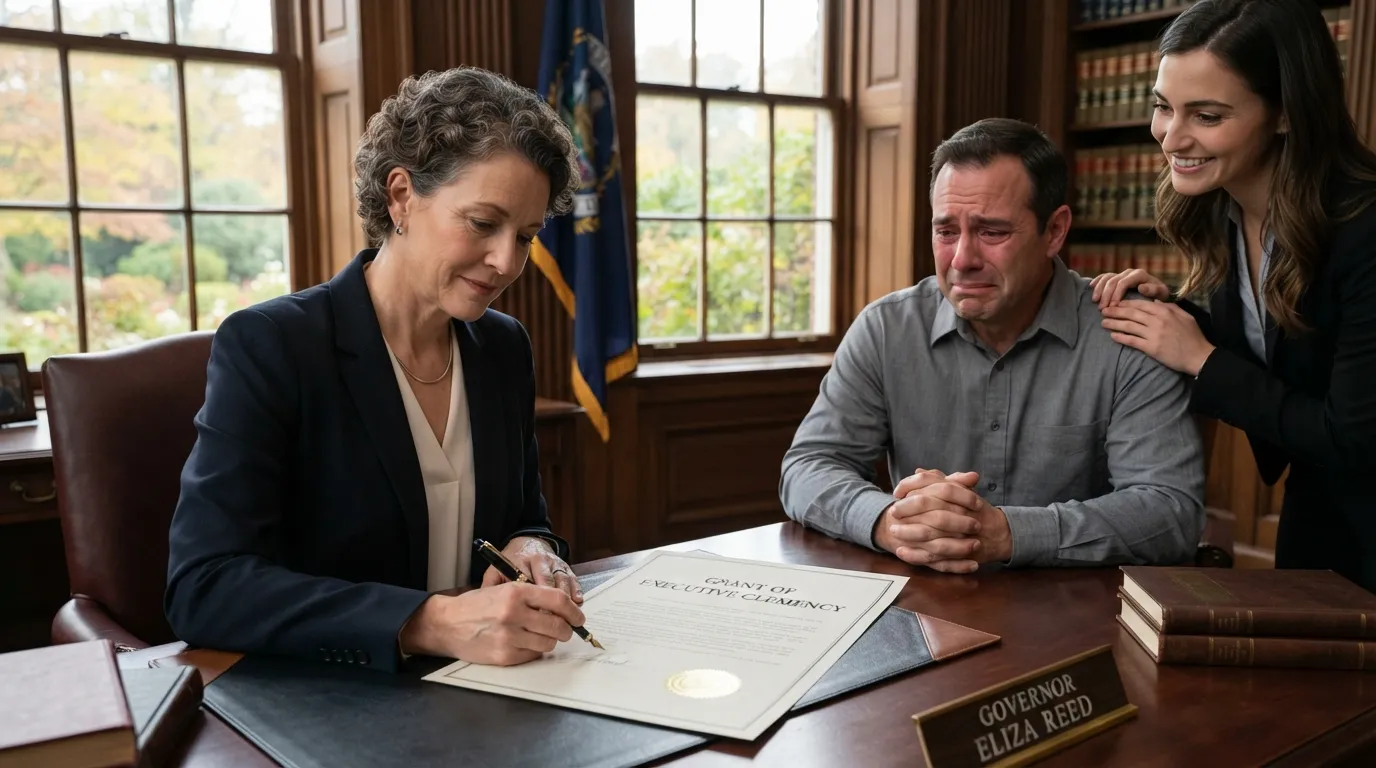
Clemency meaning is simple: it means showing mercy or reducing a punishment. In U.S. law, clemency can give a person relief from some effects of a criminal conviction or sentence. It can include a pardon, a shorter sentence, or a delay in punishment.
The term is often used in news stories and legal cases. It can sound hard because it covers several types of legal relief. But the basic idea is easy to understand: someone in power chooses to show mercy.
In this guide, you will learn what the term means, how it works in the United States, the main types, and how it differs from a pardon. You will also see simple examples and common mistakes to avoid.
What Does Clemency Mean?
Clemency means mercy or less severe treatment for someone who has been punished for a crime. In U.S. law, it is a broad term for certain types of relief given by an executive official.
For example, a sentence may be made shorter. A punishment may be delayed. In some cases, a person may receive a pardon.
The exact result depends on the type of relief given. A pardon and a commutation do not have the same effect.
The U.S. Department of Justice explains that federal clemency includes pardons, commutations, reprieves, and remission of certain fines or restitution.
How Is Clemency Used in U.S. Law?
In the United States, clemency can be used at both the federal and state levels.
The President can grant clemency for federal crimes. A federal crime is an offense under U.S. federal law.
Governors usually handle clemency for crimes under state law. The rules can be different in each state.
At the federal level, the U.S. Department of Justice has an Office of the Pardon Attorney. This office helps with the federal clemency process.
The President has the final power to grant federal clemency. A person may ask for relief, but making a request does not mean it will be granted.
The word is common in legal news because it can affect a person’s sentence or some legal effects of a conviction.
Types of Clemency Explained
There are several forms of clemency. Each one has a different purpose.
| Type | Simple meaning |
| Pardon | Forgives a federal offense and may remove some legal effects |
| Commutation | Makes a prison sentence shorter or less severe |
| Reprieve | Delays a punishment for a period of time |
| Remission | Cancels or reduces certain financial penalties |
A pardon and a commutation are easy to mix up.
A pardon is a form of forgiveness. It can give a person certain legal benefits, but it does not mean the person was found innocent.
A commutation is different. It changes the punishment, such as making a prison sentence shorter. It does not erase the conviction.
A reprieve is also different. It mainly gives more time before a punishment is carried out.
Clemency vs. Pardon: What Is the Difference?
Clemency is the larger term. A pardon is one type of clemency.
You can think of it this way:
- Clemency: The broad idea of mercy or legal relief.
- Pardon: Forgiveness for an offense.
- Commutation: A shorter or lighter sentence.
- Reprieve: A delay in punishment.
For example, imagine a person has a 20-year federal prison sentence. If the sentence is changed to 10 years, that is a commutation.
If the person later receives a pardon, that is a different type of relief.
A pardon does not mean that the court’s conviction never happened. The U.S. Department of Justice says a pardon does not prove that the person was innocent.
This difference is important when reading legal news or government statements.
What Does Clemency Mean in Everyday English?
In everyday English, the word means mercy or kindness when dealing with someone’s mistake or wrongdoing.
It does not always have to mean a formal legal action.
For example:
- “The teacher showed clemency after the student made a small mistake.”
- “The coach showed clemency and gave the player another chance.”
- “The family asked for clemency.”
In these examples, the main idea is mercy.
The word is more common in formal writing than in casual speech. People may use words such as mercy, kindness, or leniency in normal conversation instead.
The related word clement can also mean mild or gentle. It is sometimes used when talking about weather. For example, “clement weather” means mild or pleasant weather.
Clemency Examples in a Sentence
Examples can make the meaning easier to understand.
Example 1:
“The prisoner asked the governor for clemency.”
This means the prisoner asked for mercy or legal relief.
Example 2:
“The president granted clemency to several people.”
Here, the word refers to executive relief from federal criminal penalties.
Example 3:
“The family asked for clemency before the sentence was carried out.”
The family wanted a less severe result or a delay in punishment.
Example 4:
“The governor considered the request for clemency.”
This means the governor considered a request for legal mercy.
Example 5:
“The sentence was reduced after clemency was granted.”
Here, the action resulted in a lighter punishment.
These examples show that the word can be used in both legal and general writing.
Common Misunderstandings About Clemency
One common mistake is thinking that clemency always means innocence. It does not.
A pardon, for example, does not mean a person was found innocent. It is an act of forgiveness and relief.
Another mistake is thinking that clemency always means a pardon. That is also not true.
A pardon is only one form. A sentence can also be reduced through a commutation. A punishment can be delayed through a reprieve.
It is also important to know the difference between federal and state crimes.
The President’s federal pardon power applies to offenses against the United States. State governors generally deal with state crimes, but each state has its own rules.
Clemency is also different from an acquittal. An acquittal is a court decision that a person is not guilty of a charged crime. Clemency happens through executive power and is not the same court process.
Similar Words and Their Meanings
Several words have meanings close to clemency, but they are not always the same.
Mercy means choosing not to be as harsh toward someone.
Leniency means using less severe treatment or punishment.
Pardon is a specific form of legal forgiveness.
Commutation means reducing a sentence.
Reprieve means delaying a punishment.
Amnesty can mean official forgiveness for a group of people or certain acts. Its exact meaning can change based on the law or situation.
These words may look similar, but using the right one matters in legal writing.
For example, saying that a prison sentence was reduced is more exact than simply saying that the person received mercy.
FAQs:
Is clemency the same as forgiveness?
Not always. Some forms involve forgiveness, while others only reduce or delay a punishment.
Is clemency the same as a pardon?
No. A pardon is one type of clemency. The larger term can also include other forms of relief.
Who can grant federal clemency?
The President can grant federal pardons and reprieves for offenses against the United States, subject to constitutional limits.
Does a commutation erase a conviction?
No. A commutation can reduce a sentence, but it does not erase the underlying conviction.
Can a governor grant clemency?
Yes. Governors can generally grant forms of clemency for state crimes. The exact rules vary by state.
Conclusion:
Clemency means mercy or less severe treatment after a criminal offense. In U.S. law, it can include a pardon, commutation, reprieve, or certain forms of remission.
These forms do different things. A pardon is not the same as a shorter sentence.
Knowing the type of relief helps you understand the term when you see it in legal writing or news reports.

Hello, I am Ethan Carter a dedicated content creator and storyteller with expertise in literary techniques and language learning. At similiezmeta.com, my crafts engaging articles on similes, idioms, and figurative language designed specifically for children and beginners.