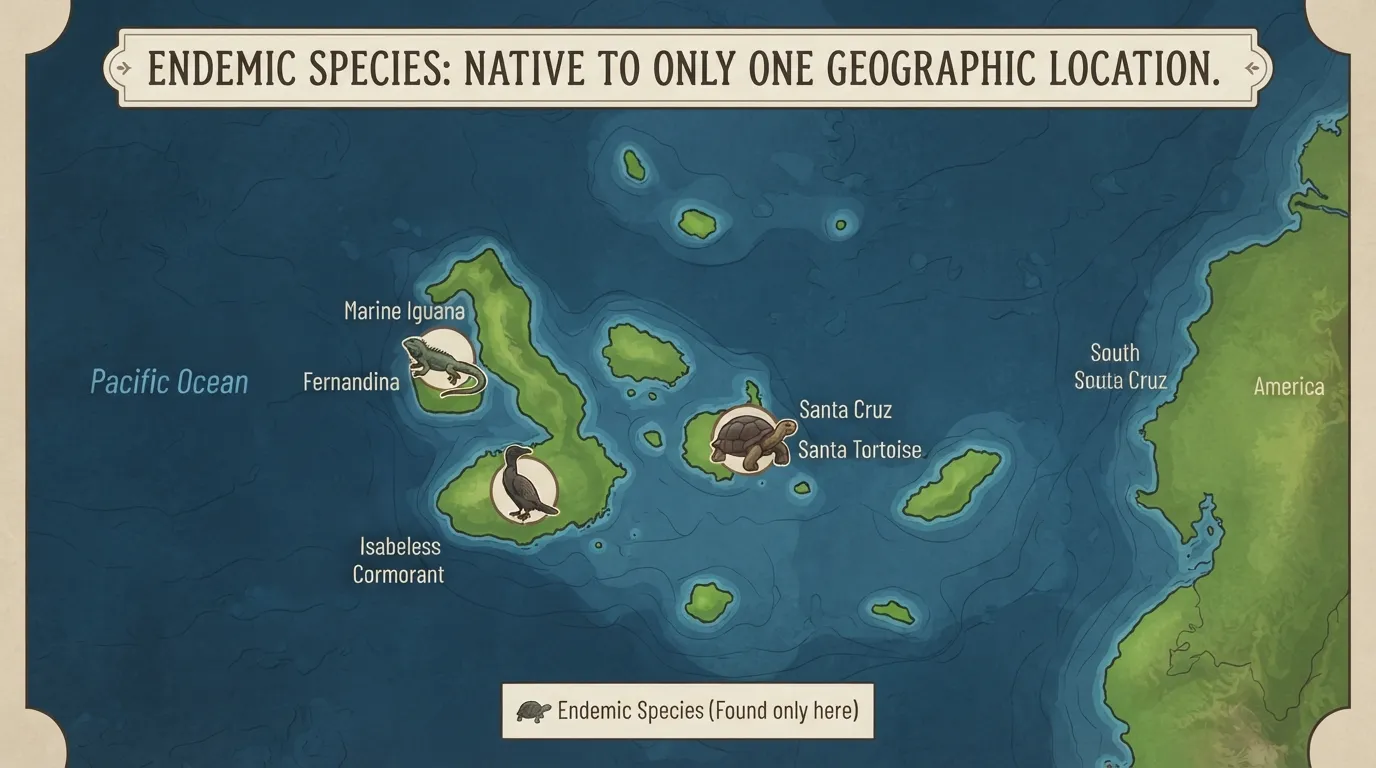
Have you seen the word endemic in a news story, health report, science article, or everyday conversation and wondered what it really means? You are not alone. The word can sound technical, but its basic idea is simple.
The endemic meaning is something that is regularly found in a certain place, group, or population. It often describes a disease that stays at a usual level in a specific area. But the word can also describe plants, animals, social problems, and other things that are strongly linked to a place or group. Cambridge defines endemic as something regularly found and common among a particular group or in a particular area.
In this guide, you will learn what endemic means, how to use it in a sentence, how it differs from epidemic, and why the word does not always mean “dangerous” or “spreading fast.”
Quick Answer
Endemic means regularly found in a particular place, area, or group. It is often used for a disease that is normally present in a certain population or region. For example, if a disease is endemic to an area, it is regularly found there rather than being a new or unusual occurrence.
Definition & Meaning
The simplest endemic meaning is:
Endemic describes something that is naturally, regularly, or commonly found in a particular place or group.
The word often appears in health and science writing. For example:
- Malaria is endemic in some regions.
- A plant may be endemic to one island.
- A social problem may be described as endemic to a community.
- A certain animal may be endemic to a specific region.
The exact meaning depends on context.
In public health, the word has a more specific use. The CDC describes an endemic disease as one that has a constant presence or usual prevalence within a particular geographic area or population.
So, endemic does not simply mean “very common.” The idea of a particular place or population is important.
What Does Endemic Mean in Simple English?
In simple English, endemic means “normally found in a certain place or group.”
Think about a local plant that grows naturally on one island. You could call that plant endemic to the island.
Now think about a disease that regularly occurs in a certain region. That disease can be called endemic to that region.
The key idea is connection to a specific place or group.
A useful way to remember it is:
Endemic = regularly found in a particular place or population.
Endemic Meaning in Medical Terms
The word endemic has an important meaning in medicine and epidemiology.
An endemic disease is a disease that remains present at an expected or usual level in a certain area or population. The CDC explains endemicity in terms of the constant presence or usual prevalence of a disease or infectious agent in a geographic area or population.
This does not automatically mean that the disease is getting worse.
For example, imagine that a disease regularly occurs in a region year after year. Health officials may consider that disease endemic there if its presence follows an established pattern.
The important point is that endemic describes a pattern of occurrence, not simply the seriousness of a disease.
Endemic vs Epidemic
People often confuse endemic and epidemic because both words appear in health reports.
They are not the same.
Endemic usually describes the normal or expected presence of a disease in a particular population or area.
Epidemic describes a situation where cases rise above what is normally expected in a particular area or group. The CDC distinguishes an endemic level from an epidemic, which involves more cases than expected for a place and period.
| Term | Meaning | Simple Example |
| Endemic | Regularly present in a specific area or group | A disease normally found in a region |
| Epidemic | Cases rise above the expected level | A sudden rise in cases in a city |
| Pandemic | An epidemic spreads across many countries or regions | A large international outbreak |
| Sporadic | Occurs only sometimes and without a regular pattern | Occasional isolated cases |
The easiest way to remember the difference is:
Endemic = expected presence.
Epidemic = unusual increase.
However, the exact classification depends on the population, location, time period, and disease pattern.
Endemic Meaning in Biology
You may also see endemic in biology and ecology.
In this context, it often describes a plant or animal that naturally occurs in a particular geographic area.
For example, a species may be found naturally on one island and nowhere else in the world. In that case, scientists may describe the species as endemic to that island.
Here, the word does not mean the species is sick or dangerous.
This is an important point:
Endemic is not a medical word only.
It can describe living things that have a natural geographic range.
For example:
- The bird is endemic to the island.
- This flower is endemic to the mountain region.
- The species is endemic to a small part of the country.
Endemic Meaning in Everyday Language
People also use endemic outside science and medicine.
Cambridge gives examples of the word being used with social conditions such as racism, poverty, and violence.
For example:
- Poverty is endemic in some areas.
- Corruption became endemic within the organization.
- The problem is endemic to the industry.
- Stress can seem endemic in some workplaces.
In these sentences, endemic suggests that the problem is deeply or regularly present within a certain setting.
It does not necessarily mean that the problem exists everywhere.
What Does “Endemic to” Mean?
The phrase “endemic to” means that something is especially associated with or naturally found in a particular place or group.
Examples:
- This plant is endemic to the island.
- The bird is endemic to the region.
- The disease is endemic to the area.
- The problem is endemic to the industry.
The word to connects the thing being described with its particular place or group.
You may also see endemic in or endemic among, depending on the sentence.
For example:
- The disease is endemic in the region.
- The disease is endemic among the local population.
- The species is endemic to the island.
Endemic Meaning vs Common
Endemic and common can sometimes look similar, but they do not carry exactly the same idea.
Common means something happens often or exists in large numbers.
Endemic adds the idea of a particular place or group.
For example:
“This bird is common in the region.”
This tells you that the bird is found there often.
“This bird is endemic to the region.”
This tells you that the bird has a specific natural connection to that region.
So, endemic is more specific than common in many contexts.
Endemic Meaning vs Native
The words endemic and native can also overlap.
Native usually means something naturally belongs to or originated in a particular place.
Endemic is more specific. It often suggests that something is restricted to a particular geographic area or group.
For example:
“The plant is native to the country.”
This means the plant naturally occurs there.
“The plant is endemic to the island.”
This gives a narrower geographic connection.
Not every native species is endemic. A native species may naturally occur across a large region.
Common Mistakes With the Word Endemic
The word is easy to misuse because people often treat it as a synonym for “bad,” “dangerous,” or “widespread.”
Those meanings are not always correct.
| Common Mistake | Correct Understanding |
| Endemic always means dangerous | It simply describes a regular or specific connection to a place or group |
| Endemic means the same as epidemic | Endemic describes an established presence; epidemic refers to an increase above the expected level |
| Endemic only describes diseases | It can also describe plants, animals, and social conditions |
| Endemic means everywhere | It usually involves a particular place or population |
| Endemic always means increasing | A disease can be endemic without being in a sudden growth phase |
| Endemic means rare | Something endemic can be common within its specific area |
| Endemic and native always mean the same thing | The terms can overlap, but endemic often gives a more limited geographic meaning |
Knowing these differences can help you understand news reports and scientific writing more clearly.
How to Use Endemic in a Sentence
Here are some simple examples:
- Malaria is endemic in some tropical regions.
- The bird is endemic to the island.
- This plant is endemic to the mountain area.
- The disease remains endemic in the region.
- The problem became endemic within the organization.
- Several species are endemic to the area.
- The local disease is endemic among parts of the population.
- Some social problems can become endemic over time.
Notice that the word often appears with to, in, or among.
Endemic Examples in Real Contexts
Understanding context makes the word much easier.
Health
“The disease is endemic in the region.”
This means the disease is regularly present there.
Wildlife
“The animal is endemic to the island.”
This means the animal naturally occurs there and has a specific geographic range.
Plants
“This flower is endemic to the mountain.”
The flower naturally belongs to that particular area.
Society
“The problem is endemic to the industry.”
This means the problem is seen regularly or widely within that particular industry.
Work
“Stress seems endemic in the workplace.”
Here, the speaker means stress is a common and persistent feature of that setting.
Quick Reference Checklist
Use this checklist when you see or use the word endemic:
| Quick Check | What to Ask |
| Place | Is a specific area mentioned? |
| Group | Is a particular population or group involved? |
| Pattern | Is the thing regularly present or common there? |
| Health | Is the sentence about a disease or infection? |
| Biology | Is it about a plant or animal with a limited natural range? |
| Context | Is “endemic” being used for a social or general problem? |
| Comparison | Is the writer actually describing an unusual increase? If so, “epidemic” may be more suitable |
This simple check can prevent most common mistakes.
Is Endemic a Negative Word?
Not always.
The word itself is neutral. Its meaning depends on what it describes.
For example:
“The species is endemic to the island.”
There is nothing negative about that sentence.
But:
“Poverty is endemic in the area.”
The subject is negative, so the sentence has a negative meaning.
The word endemic itself does not tell you whether something is good or bad.
Can Endemic Mean “Widespread”?
Sometimes the word can suggest that something is widespread within a particular group or place. Cambridge lists “widespread” and “prevalent” among related words, but endemic carries the added idea of being linked to a particular area or group.
So you should not replace endemic with widespread in every sentence.
For example:
“The species is endemic to the island.”
This is more specific than:
“The species is widespread.”
The first sentence tells you about the species’ geographic connection. The second only tells you that it occurs across a broad area.
How to Remember the Endemic Meaning
Use this simple memory trick:
Endemic = “belongs regularly to a place or group.”
When you see the word, ask:
“Where is it normally found?”
That question often gives you the answer.
If the sentence talks about a disease, think:
“A disease that normally stays present in this population or area.”
If the sentence talks about an animal or plant, think:
“A species naturally linked to this geographic area.”
If it talks about a social problem, think:
“A problem that is deeply or regularly present in this setting.”
FAQs:
1. What is the simple meaning of endemic?
Endemic means regularly found in a particular place, area, or group. It often describes a disease that normally occurs in a certain population, but it can also describe plants, animals, and social conditions.
2. What does endemic mean in medical terms?
In medicine, endemic describes a disease or infectious agent that has a constant presence or usual level of occurrence in a specific population or geographic area.
3. What is the difference between endemic and epidemic?
Endemic describes the usual or expected presence of a disease in a population or area. Epidemic describes cases occurring above the expected level for that population, place, or period.
4. What does endemic to a place mean?
“Endemic to a place” means something has a strong natural or regular connection to that place. For example, an animal can be endemic to an island if it naturally occurs there.
5. Does endemic mean dangerous?
No. Endemic does not mean dangerous. It describes where something is regularly found or the pattern in which it occurs. The thing being described may be harmful, harmless, or beneficial.
6. Can endemic describe plants and animals?
Yes. In biology, endemic can describe a species that naturally occurs within a particular geographic area. It is not limited to diseases.
7. Is endemic the same as common?
Not exactly. Common means something occurs often or in large numbers. Endemic usually adds a connection to a particular place or population. Something can be common in an area without being endemic to it.
Conclusion:
The endemic meaning is simple once you focus on the idea of a specific place or group. Endemic describes something that is regularly found or normally present in a particular area or population. In health, it can describe a disease that stays at an expected level in a region. In biology, it can describe a plant or animal naturally linked to a specific area. It can also describe social problems.
The key is not to confuse endemic with epidemic. Endemic describes an established pattern, while epidemic describes an unusual rise above the expected level.
When you see endemic, simply ask: “Where or among whom is this normally found?” That question will usually make the meaning clear.

Hello, I am Ethan Carter a dedicated content creator and storyteller with expertise in literary techniques and language learning. At similiezmeta.com, my crafts engaging articles on similes, idioms, and figurative language designed specifically for children and beginners.