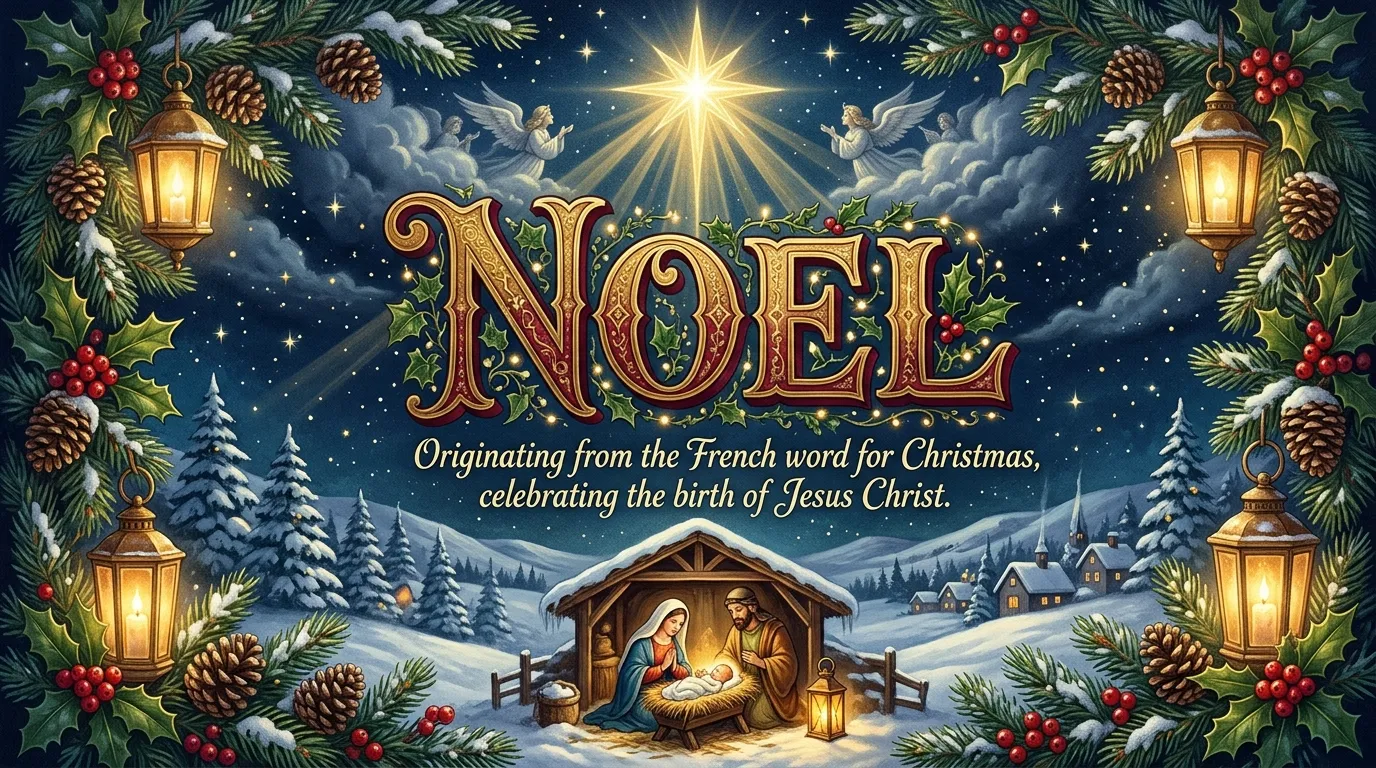
Have you ever seen the word Noel on a Christmas card, heard it in a holiday song, or noticed it as someone’s first name? This word has a warm and joyful feel, but its meaning goes much deeper than Christmas decorations and music.
The noel meaning is closely linked to Christmas, birth, and the celebration of the birth of Jesus Christ. The word comes from the French word Noël, which means Christmas. Its roots also connect to the Latin word natalis, meaning birth or relating to birth.
Today, people use Noel as a word for Christmas and as a personal name for boys and girls. It also appears in Christmas carols, family traditions, greeting cards, and holiday messages.
In this guide, you will learn what Noel means, where it comes from, how to pronounce it, and why it holds a special place in Christmas culture. You will also discover its use as a name and the difference between Noel and Noël.
Quick Answer
Noel means Christmas or the celebration of the birth of Jesus Christ. It comes from the French word Noël, which has roots in the Latin word natalis, meaning birth. Noel is also a given name for boys and girls, often linked to Christmas, joy, hope, and new beginnings.
Definition and Meaning of Noel
The word Noel has two main meanings in English.
- Christmas: It refers to the Christian celebration of the birth of Jesus Christ.
- Christmas carol: It can also describe a song or hymn sung during the Christmas season.
As a personal name, Noel has a special meaning too. Parents often choose it because of its link to Christmas, birth, and joy.
The word does not simply mean a happy holiday. Its history connects it to the idea of birth. This is why people often link Noel with new life, hope, peace, and fresh beginnings.
For example:
- We sang a beautiful Noel at the Christmas service.
- Noel is a lovely name for a baby born in December.
- The word Noel reminds many people of the joy of Christmas.
The meaning can change slightly based on how someone uses it. In a song, it may refer to a Christmas hymn. On a greeting card, it often stands for Christmas. As a name, it carries a link to the holiday and its history.
What Is the Origin of the Word Noel?
Noel has French and Latin roots. Its history goes back many centuries.
The modern English word came from the Old French word noel. French speakers used it to refer to Christmas and the celebration of the birth of Jesus.
The Old French word came from the Latin word natalis. This Latin word means “relating to birth.” It also appears in the Latin phrase natalis dies, which means “day of birth.”
In Christian Latin, this phrase became linked to the birth of Jesus Christ. Over time, the French word Noël became the common name for Christmas.
English speakers later adopted the word. It became known as a word for Christmas and, in another use, a Christmas song.
The history also explains why Noel is used as a personal name. In the past, families often gave this name to children born around Christmas Day.
The French Academy and historical dictionaries support this connection between Noël and the Latin word natalis.
What Does Noel Mean in French?
In French, Noël means Christmas. It refers to the holiday that celebrates the birth of Jesus Christ on December 25.
French speakers use the word in many common holiday expressions.
Here are a few examples:
- Joyeux Noël: Merry Christmas.
- La fête de Noël: The Christmas celebration.
- Le sapin de Noël: The Christmas tree.
- Le Père Noël: Santa Claus.
- Les cadeaux de Noël: Christmas gifts.
The word also refers to the traditions and events that take place during the holiday season.
For example, a French family might say, “Nous célébrons Noël en famille.” This means, “We celebrate Christmas with our family.”
One small detail is worth knowing: French uses the two dots over the letter e in Noël. This mark is called a diaeresis. It shows that the two vowels should be pronounced separately.
How Do You Pronounce Noel?
The pronunciation of Noel can vary based on the language, accent, and spelling.
In American English, many people pronounce the name as NOH-uhl. Others use a two-syllable pronunciation that sounds closer to no-EL.
The French form Noël has two clear vowel sounds. English speakers may say it in a slightly different way.
Here is a simple guide:
| Form | Common pronunciation | Language |
| Noel | NOH-uhl | English |
| Noël | no-EL | French |
| Noelle | no-EL | English |
| Noëlle | no-EL | French |
If you are choosing Noel as a baby name, you can use the pronunciation you prefer. However, it helps to tell people how you want them to say it.
What Does Noel Mean as a Name?
Noel is a given name with French roots. It means Christmas and has a strong connection to the birth of Jesus Christ.
Historically, families sometimes gave this name to children born on Christmas Day or during the Christmas season.
Today, parents may choose Noel for several reasons:
- They love its Christmas connection.
- They want a name with French roots.
- They like its short and simple sound.
- They want a name linked to hope and joy.
- They prefer a name with a long history.
Noel is used for both boys and girls in English-speaking countries. Its use can depend on family traditions and personal taste.
The French spelling Noël is traditionally masculine. Noëlle is a common feminine form in French. In English, however, people may use Noel for either gender.
Is Noel a Boy’s or Girl’s Name?
Noel is a unisex name, which means parents can use it for a boy or a girl.
In many naming traditions, Noel has been more common as a boy’s name. The French feminine forms include Noëlle and Noélie.
In English-speaking families, naming rules are more flexible. Some parents choose Noel for girls without changing its spelling.
Here is a simple comparison:
| Name | Common use | Origin or form |
| Noel | Boys and girls | English form |
| Noël | Mainly boys | French form |
| Noelle | Mainly girls | English feminine form |
| Noëlle | Girls | French feminine form |
| Noelia | Girls | Spanish form |
| Noélie | Girls | French form |
There is no rule that says a family must follow one naming tradition. Parents can choose the spelling and form that they like.
What Is the Spiritual Meaning of Noel?
Noel has a strong spiritual connection to Christianity because it refers to Christmas.
For Christians, Christmas celebrates the birth of Jesus Christ. It is a time to remember God’s love, the message of salvation, and the hope that Jesus brought into the world.
The spiritual meaning of Noel can include several ideas:
1. Hope: Christmas reminds Christians that hope can remain strong even during hard times.
2. Love: The birth of Jesus is central to the Christian message of God’s love for humanity.
3. Peace: Christmas encourages people to seek peace, kindness, and goodwill toward others.
4. New beginnings: The word’s Latin root relates to birth. This gives Noel a natural connection to new life and fresh starts.
5. Faith: Noel can remind Christians to reflect on the meaning of Jesus’s birth rather than focus only on gifts and celebrations.
The Bible tells the story of Jesus’s birth in Matthew 1–2 and Luke 1–2. Luke 2:10–11 shares the angel’s message about the birth of a Savior.
Although Noel has a Christian history, people from different backgrounds may also use it as a name or a seasonal word.
What Does Noel Mean in Christmas Songs?
You may have heard the word Noel in popular Christmas songs and carols.
One well-known example is The First Noel. It is a traditional English Christmas carol that tells the story of the announcement of Jesus’s birth to the shepherds.
In Christmas music, Noel is often used as a joyful announcement of Christ’s birth.
It can appear in song titles, lyrics, and church services. When people sing the word, they are often celebrating the Christmas story.
The word also appears in the phrase “Sing Noel.” In this context, it means to sing songs that celebrate Christmas.
Noel is not the name of one specific Christmas song. It is a word that can refer to Christmas itself or to a Christmas carol.
This is why you may see it on Christmas cards, hear it in church, or find it in holiday music.
What Is the Difference Between Noel and Noël?
The words Noel and Noël are closely related. In most English contexts, they share the same basic meaning.
The main difference is the spelling and language tradition.
Noel is the common English spelling. It is often used as a first name and as a word linked to Christmas.
Noël is the French spelling. The two dots over the e are called a diaeresis. They show that the vowels should be read separately.
In French, Noël means Christmas. In English, people may use either spelling, especially when writing a person’s name.
The spelling with the accent can also help show the French origin of the word.
For everyday writing, use the spelling that matches the context. If you are writing a French greeting, use “Joyeux Noël.” If you are writing someone’s name, follow the spelling that person uses.
What Are the Different Symbolic Meanings of Noel?
Beyond its direct meaning, Noel carries several positive ideas. These ideas come from its history, religious use, and place in Christmas traditions.
Here are some common symbolic meanings:
- Joy: Noel is often linked to the happiness people feel during Christmas.
- Birth: Its Latin roots connect it to the idea of birth.
- Hope: It reminds Christians of the hope found in the birth of Jesus.
- Family: Christmas is a time when many families come together.
- Peace: The word can remind people of kindness and goodwill.
- Celebration: Noel is often used in songs, greetings, and holiday events.
- New beginnings: Its connection to birth makes it a fitting symbol of a fresh start.
These are symbolic ideas rather than separate dictionary definitions. The meaning a person gives to Noel may depend on their faith, family, culture, or personal experience.
How Is Noel Used in Everyday Language?
Noel is not a word that people use in every daily conversation. You will see it more often during the Christmas season.
It appears in greetings, music, decorations, personal names, and holiday messages.
Here are some common ways people use it.
1. On Christmas cards
People may write “Noel” on a Christmas card to share holiday wishes. It gives the message a classic and festive feel.
2. In Christmas songs
Singers use Noel in carols to celebrate the birth of Jesus. It may appear as a repeated word in a song.
3. As a baby name
Parents may choose Noel for a child born in December. Others simply like its sound and meaning.
4. In holiday decorations
You may see Noel printed on signs, banners, wall art, and Christmas ornaments.
5. In greetings
The French phrase “Joyeux Noël” means “Merry Christmas.” It is a common way to share Christmas wishes in French.
6. In books and stories
Writers may use Noel to create a Christmas setting or give a character a name with a festive connection.
The meaning is usually easy to understand from the sentence or situation.
What Is the History of Noel in English?
Noel has been part of English for many centuries.
Historical word records trace it to forms such as nowel and nouel. These forms came into English through French and referred to Christmas or the celebration of Christ’s birth.
The word later became linked to Christmas songs and carols. The use of Noel for a Christmas carol is also recorded in English dictionaries.
This gives the word more than one role. It can name the holiday, describe a Christmas song, or serve as a personal name.
The word’s older forms also explain why you may see different spellings in historical texts. Spelling was not always fixed in the way it is today.
The English word has a long history, but its central connection to Christmas has remained clear.
Noel vs. Christmas: Are They the Same?
Noel and Christmas are closely related, but they are not always used in exactly the same way.
Christmas is the standard English name for the Christian holiday. Noel is a French-derived word that also means Christmas.
However, Noel has another use. It can refer to a Christmas carol or serve as a person’s name.
For example:
- “We celebrate Christmas with our family.” Here, Christmas names the holiday.
- “We sang a Noel at church.” Here, Noel refers to a Christmas carol.
- “Our son’s name is Noel.” Here, Noel is a personal name.
Both words can refer to the same holiday, but their uses differ based on context.
Quick Reference: Noel Meaning and Usage
If you want to understand the word at a glance, use this quick reference.
| Feature | Quick information |
| Word | Noel |
| Main meaning | Christmas |
| Language origin | French |
| Older root | Latin natalis |
| Root meaning | Relating to birth |
| Name meaning | Christmas |
| Gender | Unisex in English |
| French feminine form | Noëlle |
| Main religious link | Birth of Jesus Christ |
| Common use | Names, songs, and greetings |
This table covers the main facts without confusing the word’s dictionary meaning with its symbolic meaning.
Common Mistakes People Make About Noel
Noel is a simple word, but people sometimes misunderstand its meaning or use.
Here are a few mistakes worth avoiding.
Mistake 1: Thinking Noel means only birth
The Latin root relates to birth, but the modern French word Noël means Christmas. Its modern meaning and historical root are connected, but they are not identical.
Mistake 2: Thinking Noel is only a boy’s name
Noel is used for boys and girls in English. French also has feminine forms such as Noëlle.
Mistake 3: Thinking Noel is the name of one song
Noel can refer to a Christmas carol in general. It is not limited to one particular song.
Mistake 4: Thinking Noel has no religious connection
The word has a clear historical link to the Christian celebration of Jesus’s birth. People may use it in secular settings too, but its history remains connected to Christmas.
Mistake 5: Assuming Noel and Noelle are always pronounced differently
Their pronunciation can be very similar in English. The spelling and naming tradition often make the main difference.
Understanding these points helps you use the word correctly in writing and conversation.
FAQs:
1. What does Noel mean in simple words?
Noel means Christmas. It comes from the French word Noël, which refers to the celebration of Jesus Christ’s birth. It can also mean a Christmas carol. As a personal name, Noel is linked to Christmas, joy, and new beginnings.
2. Does Noel mean birth or Christmas?
Noel means Christmas in modern French and English usage. However, its Latin root, natalis, means relating to birth. This root connects the word to the birth of Jesus Christ, which Christians celebrate at Christmas.
3. Is Noel a religious name?
Yes, Noel has a strong Christian connection because it refers to Christmas and the birth of Jesus Christ. However, parents do not need to be Christian to choose this name. Some simply like its history, sound, or connection to the holiday season.
4. Is Noel a rare name?
Noel is a recognized traditional name in English-speaking countries. Its popularity can change by country and year. It is not a newly invented name, and its long history makes it familiar to many people.
5. What does Noel mean for a baby born on Christmas?
For a baby born on Christmas Day, Noel can represent the joy of the holiday and the celebration of birth. Traditionally, families sometimes gave this name to children born during the Christmas season.
6. What does Joyeux Noël mean in English?
Joyeux Noël is a French greeting that means “Merry Christmas” in English. People use it to share good wishes during the Christmas season. You may see it on cards, decorations, and holiday messages.
7. What is the difference between Noel, Noelle, and Noël?
Noel is the common English form of the name and can be used for boys or girls. Noelle is a common feminine form in English. Noël is the French spelling, traditionally used as a masculine name and as the French word for Christmas. Noëlle is a French feminine form.
Conclusion:
The noel meaning goes beyond a simple Christmas greeting. It comes from French and Latin roots and has a long connection to the birth of Jesus Christ. Today, people use Noel as a word for Christmas, a type of Christmas carol, and a personal name for boys and girls.
Its links to birth, hope, joy, and new beginnings make it a meaningful word. If you found Noel on a Christmas card, heard it in a song, or are thinking of using it as a baby name, its history gives it a special place in language and culture.
If you enjoy learning about word meanings and their origins, explore more word guides to discover the stories behind everyday names and expressions.

Hello, I am Daniel Brooks a passionate writer and educator with a deep love for language and creative expression. My work on similiezmeta.com focuses on helping kids and students explore the beauty of words through playful examples and practical explanations.


