Have you ever tried to convince someone by using facts instead of feelings? For example, you might explain why students should study every day by showing how regular practice can improve their skills. This is a simple example of logos.
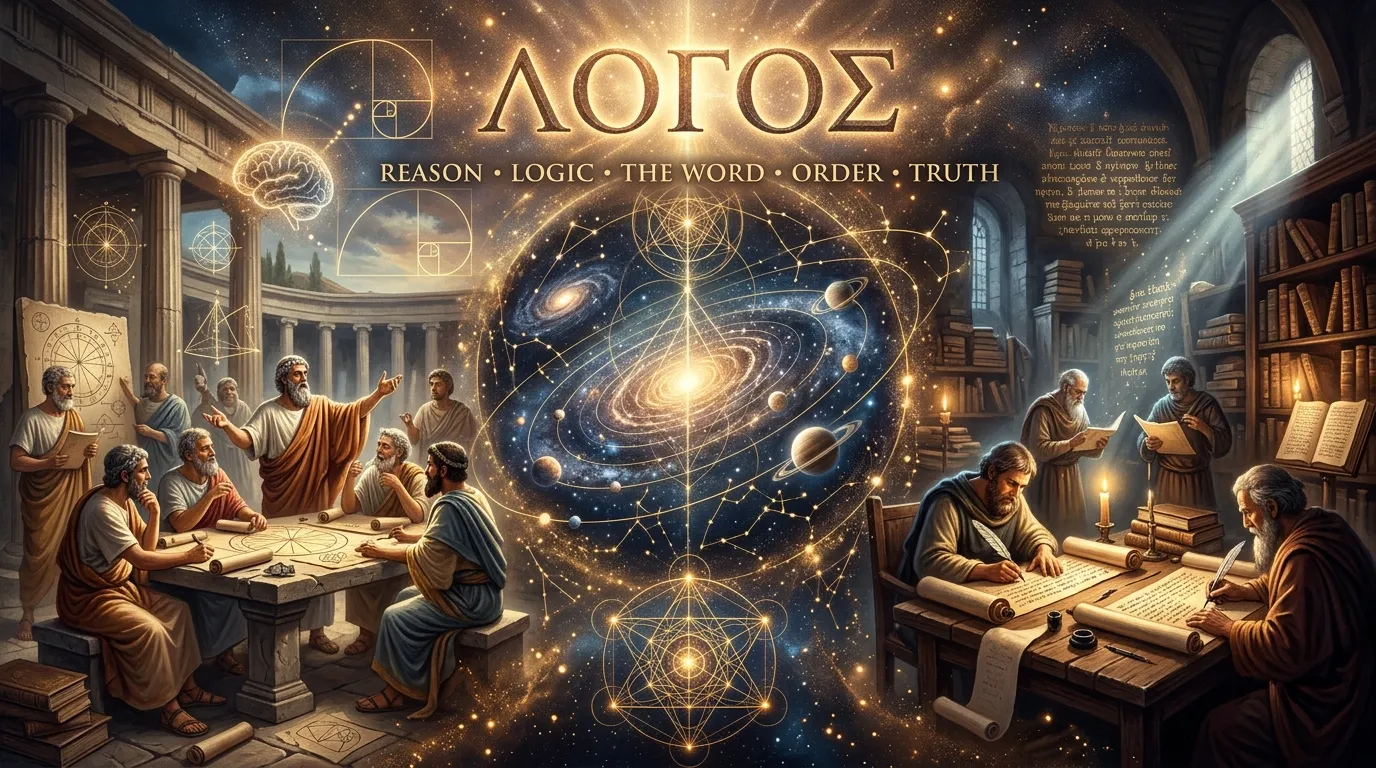
The word logos has roots in ancient Greek. It can mean word, speech, reason, thought, or logic. Today, people use it in writing, public speaking, philosophy, and religion. Its meaning can change based on the topic and the way someone uses it.
If you are searching for the logos meaning, this guide will help you understand it in simple words. You will learn its origin, common uses, and real-life examples. You will also see how logos works with ethos and pathos in writing and speech.
By the end, you will know how to spot logos in an argument, use it in your own writing, and understand its deeper meaning in the Bible.
Quick Answer: What Does Logos Mean?
Logos means reason, logic, word, or speech. In writing and public speaking, it refers to an appeal to logic. A speaker uses facts, clear reasons, examples, and evidence to help people accept an idea.
For example, a student may use test results to show why daily study helps improve grades. This is an example of logos.
In Greek philosophy, the word can also refer to reason or a rational order in the world. In Christian theology, Logos refers to the divine Word and is linked to Jesus Christ.
Logos Definition and Meaning
Logos is a Greek word with several related meanings. These include word, speech, statement, thought, reason, and explanation.
In simple English, logos is the use of clear thought and reason to explain something or support an idea.
The term has different meanings in different fields:
- In writing: It means using facts and logical reasons to support an argument.
- In public speaking: It means giving a clear and sensible argument.
- In philosophy: It can mean reason or the rational order of the universe.
- In Christianity: It refers to the Word of God and Jesus Christ.
- In everyday use: It can describe a logical way of thinking.
The main idea behind logos is reason. It helps people understand why a claim makes sense.
What Is the Origin of the Greek Word Logos?
The word logos comes from ancient Greek. It is linked to the Greek verb legein, which means to say, speak, or tell.
Over time, people used logos in many ways. It could refer to a spoken word, a statement, an explanation, or a reasoned thought.
Ancient Greek thinkers also used the term to discuss reason and the order of the world.
One important thinker was Heraclitus. He used logos to describe a rational principle linked to the way the world works. Later, Stoic thinkers also used the term when they discussed reason and the order of nature.
The word later became important in Christian thought, where it took on a special meaning as the Word of God.
This long history explains why logos does not have just one meaning today.
Logos in Rhetoric: The Appeal to Logic
In rhetoric, logos means using logic to persuade an audience.
Rhetoric is the art of speaking or writing in a way that helps people understand or accept an idea.
When a writer uses logos, they support their claims with things such as:
- Facts and reliable data
- Clear explanations
- Real examples
- Research findings
- Cause-and-effect links
- Logical comparisons
For example, imagine a teacher wants students to read every day.
Instead of saying, “Reading is good, so you should do it,” the teacher explains that daily reading gives students more chances to learn new words and improve their reading skills.
The teacher gives a clear reason. This makes the argument stronger.
However, using logos does not mean adding as many numbers as possible. The facts must relate to the topic and support the main point.
A strong logical argument should also avoid false claims and weak evidence.
What Are Logos, Ethos, and Pathos?
Logos, ethos, and pathos are three common forms of persuasion linked to Aristotle’s work on rhetoric.
Each one helps a speaker connect with an audience in a different way.
- Logos: Appeals to reason and logic.
- Ethos: Appeals to trust and the speaker’s credibility.
- Pathos: Appeals to feelings and emotions.
A good speech or written argument can use all three.
For example, imagine a doctor wants people to exercise more often.
The doctor may use research to explain the value of exercise. This is logos.
The doctor may also share their medical training and experience. This is ethos.
Finally, the doctor may explain how regular activity can help people enjoy daily life with more energy. This appeals to pathos.
Each method has a different role. Together, they can make a message more effective.
Logos vs. Ethos vs. Pathos: Key Differences
| Feature | Logos | Ethos | Pathos |
| Main appeal | Logic | Trust | Emotion |
| Focus | Facts and reasons | Speaker’s credibility | Audience’s feelings |
| Common tools | Data, examples, evidence | Experience, honesty, expertise | Stories, emotional words |
| Main question | Does this make sense? | Can I trust this person? | How does this make me feel? |
| Example | Showing study results | Sharing teaching experience | Telling an inspiring story |
The three appeals work best when they support each other.
Logos gives people reasons to accept an idea. Ethos helps them trust the person sharing it. Pathos helps them connect with the message.
Real-Life Examples of Logos
You can find logos in school, work, daily life, and public discussions.
Here are some simple examples.
1. In Education
A teacher says, “Students who practice math problems can find more chances to understand each lesson.”
The teacher gives a reason to support regular practice.
2. In Health
A person says, “Walking can help you stay active because it makes your body move.”
This uses a simple reason to support the value of walking.
3. In Business
A shop owner says, “This product costs less than the other model and offers the features you need.”
The owner uses a price comparison to support the choice.
4. In the Workplace
A manager says, “We should plan tasks before starting the project because a clear plan helps the team know what to do.”
The manager explains why planning matters.
5. In Everyday Life
A student says, “I should leave home early because traffic may slow me down.”
The student uses a logical reason to make a decision.
All these examples show how logos helps people explain their ideas with reason.
Logos in the Bible and Christianity
Logos has a special meaning in Christianity.
In the Bible, the term appears in the opening of the Gospel of John.
John 1:1 says:
“In the beginning was the Word, and the Word was with God, and the Word was God.” (KJV)
The word “Word” in this verse translates the Greek term Logos.
In Christian belief, Logos refers to Jesus Christ as the Word of God.
John 1:14 also explains this idea:
“And the Word was made flesh, and dwelt among us…” (KJV)
This verse connects the Word with Jesus coming into the world as a human being.
In simple terms, the Christian use of Logos goes beyond an ordinary spoken word. It points to God’s self-expression through Jesus Christ.
This meaning is different from the use of logos in a school essay or a public speech.
Both uses share a connection with the ideas of word and expression, but they have different roles.
Logos in Greek Philosophy
Logos also plays an important role in Greek philosophy.
Ancient thinkers used the term to discuss reason, knowledge, and the structure of the world.
Heraclitus is closely linked to the early philosophical use of logos. He connected it with a common rational order that people could understand.
Later, Stoic philosophers developed their own ideas about logos.
For the Stoics, logos was linked to the rational principle that orders the universe. They believed that human reason connects with this wider order.
This idea also shaped their views on how people should live.
They placed value on wisdom, self-control, and living in line with reason.
It is important to remember that different Greek thinkers did not always use logos in the same way. Its meaning changed across schools of thought.
How to Use Logos in Your Own Writing
You can use logos to make your writing clearer and more convincing.
The goal is to give readers a good reason to accept your point.
Follow these simple steps:
1. Start With a Clear Claim
First, tell readers what you want to explain.
Example: “Schools should give students time to read every day.”
2. Give a Reason
Explain why your claim makes sense.
Example: “Daily reading gives students regular practice with words and sentences.”
3. Add Reliable Evidence
Use facts, research, or examples that relate to your point.
Do not use random numbers or claims that you cannot check.
4. Explain the Connection
Show how your evidence supports your main idea.
Readers should not have to guess why a fact matters.
5. End With a Clear Point
Bring your reasons together and remind readers of your main message.
This simple method can help you write stronger essays, reports, and arguments.
Common Mistakes to Avoid When Using Logos
Logos can make an argument stronger, but poor use of logic can weaken it.
Here are some common mistakes and better ways to avoid them.
| Common Mistake | Correct Approach |
| Using facts that do not relate to the topic | Choose evidence that supports your main point |
| Adding numbers without explaining them | Explain what the numbers show |
| Making claims without proof | Use reliable sources or clear examples |
| Ignoring other points of view | Consider other reasonable opinions |
| Repeating the same reason | Add a new and useful point |
| Using complex words to sound smart | Explain ideas in simple language |
| Treating opinions as facts | Make the difference clear |
A strong argument does not need to sound complex. It needs to make sense and give readers enough information to understand the point.
Quick Checklist: How to Identify Logos
Use this table when you read an essay, watch a speech, or prepare your own argument.
| What to Check | What to Look For |
| Main claim | Is the main idea clear? |
| Facts | Does the speaker use relevant facts? |
| Evidence | Can readers check the information? |
| Reasons | Does each reason support the claim? |
| Examples | Do examples make the idea easier to understand? |
| Logic | Do the points connect in a sensible way? |
| Conclusion | Does the final point follow from the evidence? |
If most of these points are present, the speaker or writer may be using logos effectively.
Why Is Logos Important in Communication?
Logos helps people share ideas in a clear and sensible way.
It gives readers and listeners reasons to think about a message instead of asking them to accept it without question.
It is useful in many areas of life.
In education: Students use logos to explain answers and support their opinions.
In business: People use facts and comparisons to make better choices.
In science: Researchers use evidence and logical explanations to present their findings.
In public speaking: Speakers use clear reasons to help an audience understand their views.
In daily life: People use logic to solve problems and make choices.
Logos also helps readers think carefully. It encourages them to ask whether a claim has enough support.
Still, not every argument that sounds logical is correct. Readers should check the quality of the evidence and the way the speaker uses it.
Logos vs. Logic: Are They the Same?
Logos and logic are closely related, but they are not always the same.
Logic refers to the rules and methods of sound reasoning. It helps people decide whether an argument makes sense.
Logos is a broader term. In rhetoric, it refers to an appeal to reason through the use of facts, evidence, and clear arguments.
For example, a writer may use logical steps to explain why a certain action is useful. This is an example of logos.
In philosophy, logos can also have meanings that go beyond ordinary logic.
So, the two words share a strong link, but you should not treat them as exact synonyms in every situation.
When Should You Use Logos?
Use logos when your goal is to explain an idea, solve a problem, or support a claim with good reasons.
It works well when you need to:
- Write a school or college essay.
- Give a clear presentation.
- Explain a business decision.
- Compare two products or services.
- Support an opinion with facts.
- Help someone understand a difficult topic.
- Answer questions with clear reasons.
For example, if you want to explain why a school needs a library, you can discuss how books give students access to more learning resources.
That reason helps support your claim.
However, remember that people do not make every choice through logic alone. Feelings, values, and trust can also affect their decisions. This is why a balanced message may use logos, ethos, and pathos together.
FAQs:
1. What does logos mean in simple words?
Logos means word, reason, or logic. In writing and speaking, it means using facts, clear reasons, and evidence to support an idea. It helps people understand why an argument makes sense.
2. What is an example of logos?
A student says, “I should study every day because regular practice helps me understand my lessons.” The student gives a clear reason to support the idea. This is a simple example of logos.
3. What are the three types of rhetorical appeals?
The three main rhetorical appeals are logos, ethos, and pathos. Logos appeals to logic, ethos builds trust, and pathos connects with emotions. Speakers and writers can use all three to make their messages stronger.
4. What does logos mean in the Bible?
In the Bible, Logos means the Word. In John 1:1 and John 1:14, the term refers to Jesus Christ as the Word of God. It has a special meaning in Christian theology.
5. Is logos a Greek or Latin word?
Logos is a Greek word. It comes from the ancient Greek language and has meanings such as word, speech, thought, reason, and explanation. It also became an important term in philosophy and Christian theology.
6. What is the difference between logos and ethos?
Logos uses logic, facts, and evidence to support an idea. Ethos focuses on the speaker’s trust and credibility. For example, showing research is logos, while sharing relevant professional experience is ethos.
7. How can I use logos in an essay?
Start with a clear claim. Then give reasons and support them with reliable facts, examples, or research. Explain how the evidence connects to your point. Finish with a clear conclusion that follows from your argument.
Conclusion:
The logos meaning goes beyond a single definition. It can mean word, speech, reason, or logic. In writing and public speaking, it means using facts and clear reasons to support an idea.
In Greek philosophy, it relates to reason and the order of the world. In Christianity, it refers to Jesus Christ as the Word of God.
The best way to understand logos is to look at the topic where someone uses it. Remember to support your ideas with clear reasons and reliable evidence. This will help you become a better writer, speaker, and thinker.

Hi, I’m Christopher Hayes. I’m interested in the words and expressions people use to share their thoughts, feelings, and experiences. I especially enjoy exploring idioms, everyday phrases, similes, and figurative language.
At SimiliezMeta.com, I help readers understand the meanings behind common expressions through simple explanations and relatable examples. I aim to explain not only what a phrase means but also how and when people use it naturally.


