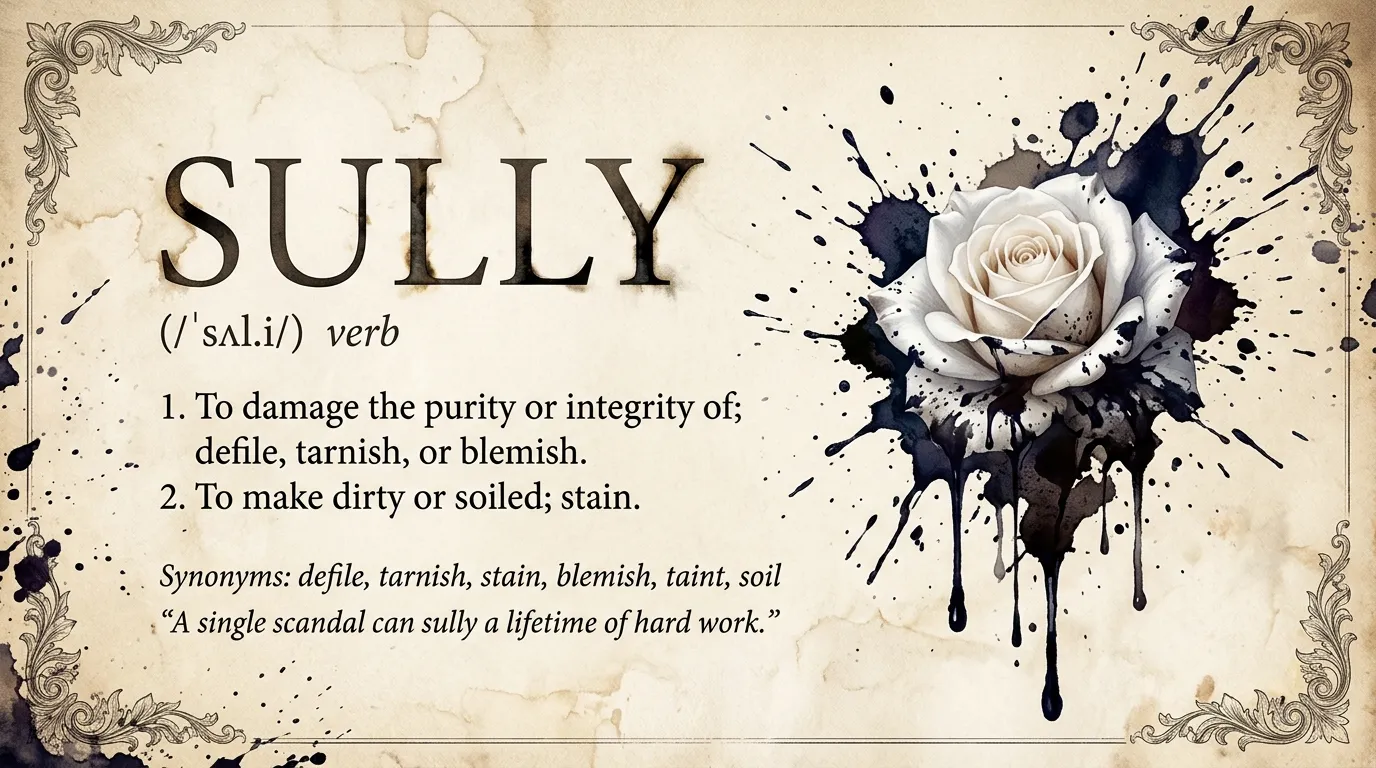
Have you ever heard someone say that a person’s actions could sully their reputation? This word may sound formal, but its meaning is easy to understand. It often appears in books, news stories, speeches, and everyday discussions about trust and respect.
The word sully means to stain, damage, or harm something’s good name, image, or reputation. It can also mean to make something dirty or less pure. People often use it when an action makes someone or something look bad.
For example, a false claim can sully a person’s good name. A careless act can sully a family’s honor. In this guide, you will learn the full meaning of sully, its origin, synonyms, antonyms, and common uses. You will also see simple examples that show how to use this word in daily writing and speech.
Quick Answer: What Does Sully Mean?
Sully means to damage, stain, or spoil something that was once clean, pure, respected, or good.
It often describes harm to a person’s reputation, honor, or public image.
Example: “The scandal could sully the actor’s reputation.”
In this sentence, sully means damage the actor’s good name.
Sully Definition and Meaning
Sully is a verb. It describes an action that makes something lose its good quality, clean state, or respected image.
The word has two main uses:
- Physical meaning: To make something dirty, stained, or less clean.
- Figurative meaning: To damage someone’s reputation, honor, name, or image.
The second meaning is more common in modern writing. You may see it in news reports, formal discussions, biographies, and stories.
For example, if someone spreads lies about a respected person, those lies may sully that person’s reputation. The person’s actual character may not change, but other people may begin to see them in a negative way.
Sully is a strong word because it often suggests that something valuable has been damaged. It can describe harm to trust, respect, purity, or public standing.
Is Sully a Verb, Noun, or Adjective?
Sully is mainly used as a verb. It describes the act of making something dirty or damaging its good name.
Here are its common forms:
| Word form | Meaning | Example |
| Sully | Present verb | Lies can sully his name. |
| Sullies | Present verb (he/she/it) | This act sullies her image. |
| Sullied | Past tense | The scandal sullied his reputation. |
| Sullying | -ing form | They are sullying the family’s honor. |
| Unsullied | Adjective | She has an unsullied record. |
You will often see the word sullied in formal writing. It describes something that has already lost some of its good image or purity.
What Does Unsullied Mean?
Unsullied is the opposite of sullied. It means clean, pure, untouched, or free from damage to one’s good name.
For example:
- She has an unsullied reputation.
- The team kept its unsullied record.
- His honor remained unsullied after the investigation.
In simple words, something unsullied has no stain, mark, or damage to its good name.
Sully Meaning in Different Contexts
The meaning of sully can change slightly based on the situation. However, its main idea stays the same: something good becomes stained or damaged.
1. Sully Meaning in Terms of Reputation
This is one of the most common uses of the word.
When someone sullies a reputation, they damage the way other people see a person, group, or business.
For example:
“His dishonest actions sullied the company’s reputation.”
This means his actions harmed the company’s good image. Customers may no longer trust the business.
A person’s reputation can also suffer because of rumors, lies, poor choices, or public mistakes. However, a negative claim does not always mean the person has done something wrong.
2. Sully Meaning in Physical Terms
Sully can also mean to make something dirty or stain its clean surface.
For example:
- Mud sullied her white shoes.
- Smoke sullied the clean walls.
- Oil sullied the clear water.
In each example, something clean becomes dirty.
This use is less common in everyday conversation than the figurative meaning. Still, you may find it in novels, poems, and formal descriptions.
3. Sully Meaning in Relationships
People sometimes use sully when they talk about trust, love, or respect.
For example:
“His lies sullied their friendship.”
This means his lies damaged the trust between two friends.
The word can describe actions that hurt a relationship or make a once-respected bond feel less pure.
4. Sully Meaning in Professional Life
In a workplace, sully often describes damage to a company’s name or a person’s professional image.
For example:
“The manager’s actions sullied the firm’s good name.”
This means the manager’s behavior harmed the way people viewed the firm.
A company can also sully its image through poor service, dishonest claims, or unfair business practices.
10 Examples of Sully in a Sentence
The easiest way to understand a new word is to see how people use it.
Here are ten simple examples of sully in a sentence:
1. False rumors can sully an innocent person’s reputation.
Meaning: False stories can damage someone’s good name.
2. The scandal sullied the politician’s public image.
Meaning: The scandal made people think less of the politician.
3. He did not want to sully his family’s honor.
Meaning: He wanted to protect his family’s good name.
4. Mud sullied her clean white dress.
Meaning: Mud made her dress dirty.
5. The dishonest deal sullied the company’s reputation.
Meaning: The deal harmed the company’s public image.
6. One mistake should not sully years of hard work.
Meaning: One mistake should not destroy the value of someone’s efforts.
7. The athlete refused to sully his record with cheating.
Meaning: He did not want cheating to damage his achievements.
8. The oil spill sullied the beauty of the beach.
Meaning: The oil made the beach dirty and less beautiful.
9. She worked hard to keep her name unsullied.
Meaning: She wanted to protect her good reputation.
10. His rude comments sullied an otherwise pleasant evening.
Meaning: His comments spoiled a good evening.
Notice that sully often appears with words such as reputation, honor, name, image, record, and purity.
Sully Synonyms: Words With Similar Meanings
A synonym is a word that has the same or a similar meaning as another word.
Sully has several synonyms. The best choice depends on what you want to describe.
| Synonym | Simple meaning | Example |
| Tarnish | Damage a good image | The scandal tarnished his name. |
| Stain | Leave a mark | Coffee stained the shirt. |
| Besmirch | Harm someone’s reputation | They tried to besmirch her character. |
| Taint | Make something less pure | Lies tainted the report. |
| Defile | Make something dirty or impure | The act defiled the sacred place. |
| Disgrace | Bring shame | His actions disgraced the team. |
| Blemish | Leave a flaw or mark | The mistake blemished his record. |
| Mar | Spoil something good | The noise marred the event. |
Which Sully Synonym Should You Use?
Not every synonym works in every sentence.
- Use tarnish when you talk about someone’s reputation or public image.
- Use stain when you describe a mark or damage.
- Use besmirch when someone attacks another person’s good name.
- Use taint when something loses its purity or trust.
- Use mar when an action spoils an otherwise good thing.
For example, you can say, “The scandal tarnished his reputation.” You can also say, “The scandal sullied his reputation.”
Both sentences express a similar idea.
Sully Antonyms: Words With Opposite Meanings
An antonym is a word with the opposite meaning of another word.
Since sully means to stain, dirty, or damage something, its antonyms often describe keeping something clean, pure, or respected.
| Antonym | Simple meaning | Example |
| Cleanse | Make clean | She cleansed the stained surface. |
| Purify | Remove dirt or harmful things | The process purified the water. |
| Honor | Show respect | His actions honored his family. |
| Protect | Keep safe | She protected her good name. |
| Preserve | Keep something in good condition | They preserved their reputation. |
| Uphold | Support or maintain | He upheld the family’s values. |
| Praise | Say good things about someone | The teacher praised her work. |
Remember that an antonym must fit the sentence. For example, protect works well as an opposite of sully when you discuss someone’s reputation. Cleanse works better when you talk about physical dirt.
Sully vs. Stain vs. Tarnish: What’s the Difference?
Sully, stain, and tarnish have similar meanings. All three can describe something that loses its clean or good condition.
However, they do not always work in the same way.
Sully often describes damage to a reputation, honor, or purity. It can also describe physical dirt.
Stain usually describes a visible mark on a surface, fabric, or object. It can also describe damage to someone’s character or reputation.
Tarnish often describes a loss of shine or a decline in someone’s good image. It can refer to both metal and reputation.
Consider these examples:
- His lies sullied his reputation.
- Red juice stained her shirt.
- The scandal tarnished the company’s image.
All three words can have a figurative meaning, but their common uses differ.
How to Use Sully Correctly in Everyday Writing
Sully is a formal word. You may not hear it often in casual conversations, but it can make your writing more precise.
Here are some simple ways to use it correctly.
1. Use Sully With Reputation
This is a natural and common word combination.
Example: “The false story could sully her reputation.”
You can also use it with good name, public image, or character.
2. Use Sullied for Past Actions
When an action has already happened, use sullied.
Example: “The news report sullied his public image.”
This tells the reader that the damage has already taken place.
3. Use Sullying for an Ongoing Action
Use sullying when an action is happening now or continues over time.
Example: “The false claims are sullying the team’s name.”
4. Do Not Use It for Every Small Mistake
Sully is a strong word. It often suggests damage to something valuable, such as trust, honor, or reputation.
For a small problem, words like spoil, mark, or mess up may sound more natural.
5. Remember the Correct Sentence Pattern
Sully usually takes a direct object. This means the sentence should tell the reader what someone or something damages.
Correct: “His actions sullied the company’s name.”
Incorrect: “His actions sullied to the company’s name.”
You do not need the word to after sully.
Sully Word Forms and Grammar Rules
Learning the different forms of sully can help you use it correctly in schoolwork, emails, and other writing.
Here are the main grammar rules:
- Present: I do not want to sully my name.
- Third-person present: His behavior sullies his image.
- Past: The false report sullied her reputation.
- Present participle: They are sullying the team’s good name.
- Past participle: His reputation has been sullied.
- Adjective: She has an unsullied record.
One useful spelling rule is that the final letter changes when you add certain endings.
For example:
- Sully becomes sullies.
- Sully becomes sullied.
- Sully becomes sullying.
Notice that sullying keeps the letter y. This helps you avoid common spelling mistakes.
Sully Pronunciation: How Do You Say Sully?
The word sully is pronounced:
SUH-lee (/ˈsʌli/)
It has two syllables:
- Suh: The first syllable carries the stress.
- Lee: The second syllable has a light sound.
The pronunciation stays the same in American and British English.
You can practice saying it in this sentence:
“Nothing should sully her good name.”
Origin and History of the Word Sully
The word sully has a long history in the English language.
It first appeared in English around the late 1500s. Its origin is linked to the Old French word souiller, which means to make dirty or soil something.
The word also has links to older English forms that describe becoming dirty or polluted. Over time, people began using sully in both physical and figurative ways.
At first, it could describe dirt or stains on an object. Later, it also became a way to describe damage to a person’s honor, character, or reputation.
Today, writers often use sully when they want to describe damage to something that people value or respect. This history helps explain why the word can refer to both physical dirt and harm to a good name.
oxfordlearnersdictionaries.com+1
Common Mistakes to Avoid When Using Sully
Some English learners confuse sully with words that have similar meanings. These small mistakes can change the meaning of a sentence.
Here are some common mistakes and their correct forms:
| Common mistake | Correct use | Why it is correct |
| He sully my name. | He sullies my name. | Use sullies with he, she, or it. |
| She sullied to his honor. | She sullied his honor. | Sully takes a direct object. |
| He has sully his image. | He has sullied his image. | Use the past participle after has. |
| The act was unsullied his name. | The act sullied his name. | Unsullied means free from damage. |
| They are sullying to the record. | They are sullying the record. | Do not add to after sully. |
Quick Reference Checklist
Use this table when you want to check whether you are using sully correctly.
| What to check | Correct rule |
| Part of speech | Mainly a verb |
| Main meaning | Stain, spoil, or damage |
| Common use | Sully someone’s reputation |
| Past tense | Sullied |
| -ing form | Sullying |
| Opposite idea | Protect or preserve |
| Writing style | Formal or literary |
| Common phrase | Sully a good name |
When Should You Use Sully?
Use sully when you want to describe damage to something that has value, respect, or purity.
It works well in these situations:
- School writing: “Cheating can sully the value of an award.”
- News writing: “The scandal sullied the public image of the leader.”
- Business writing: “Poor customer service can sully a brand’s reputation.”
- Personal writing: “I do not want to sully my family’s good name.”
- Creative writing: “Dark clouds seemed to sully the beauty of the morning sky.”
If you write for a general audience, remember that sully is a formal word. In casual speech, people may choose simpler words such as damage, stain, or spoil.
The right word depends on your message and your audience.
FAQs:
1. What does sully mean in simple words?
Sully means to make something dirty, stain it, or damage its good name. It often describes harm to a person’s reputation or honor.
For example, spreading false stories can sully someone’s reputation. In simple English, it means to make something good look bad.
2. Is sully a positive or negative word?
Sully is a negative word. It describes damage, dirt, shame, or loss of respect.
For example, “His actions sullied the team’s reputation” shows that his actions harmed the team’s good image.
3. What does sully mean in the Bible?
Sully means to stain, defile, or make something impure. In a biblical discussion, it may describe actions that harm moral purity, honor, or spiritual integrity.
However, sully is an English vocabulary word, not a special biblical term. Its meaning depends on the passage and context in which a writer uses it.
4. What is the opposite of sully?
The opposite of sully depends on the context. Common opposite words include cleanse, purify, protect, preserve, and uphold.
For example, if sully means to damage someone’s reputation, protect or preserve can express the opposite idea.
5. What is the difference between sully and sullied?
Sully is the base form of the verb. Sullied is its past tense and past participle.
Examples:
- Present: “Lies can sully his name.”
- Past: “The scandal sullied his name.”
- Present perfect: “The scandal has sullied his name.”
Both forms describe damage, but they refer to different times or grammatical structures.
6. What does unsullied mean?
Unsullied means clean, pure, or free from damage, stains, or shame. It is the opposite of sullied.
For example, “She has an unsullied reputation” means people respect her good name, and nothing has damaged it.
7. Can sully be used in everyday conversation?
Yes, you can use sully in everyday conversation. However, it sounds more formal than words such as damage, stain, or spoil.
For example, you could say, “I don’t want to sully my reputation.” This sounds natural in a serious discussion about trust, honesty, or respect.
Conclusion:
The word sully means to stain, dirty, spoil, or damage something’s good name or value. It is mainly a verb and often appears in discussions about reputation, honor, trust, and purity.
Its past form is sullied, while sullying describes an ongoing action. Its opposite, unsullied, means clean or free from damage. Remember that sully is a formal word, so use it when you want to express a strong idea. Practice with simple sentences, and you will soon feel confident using it in your own writing.

Hello, I am Daniel Brooks a passionate writer and educator with a deep love for language and creative expression. My work on similiezmeta.com focuses on helping kids and students explore the beauty of words through playful examples and practical explanations.


