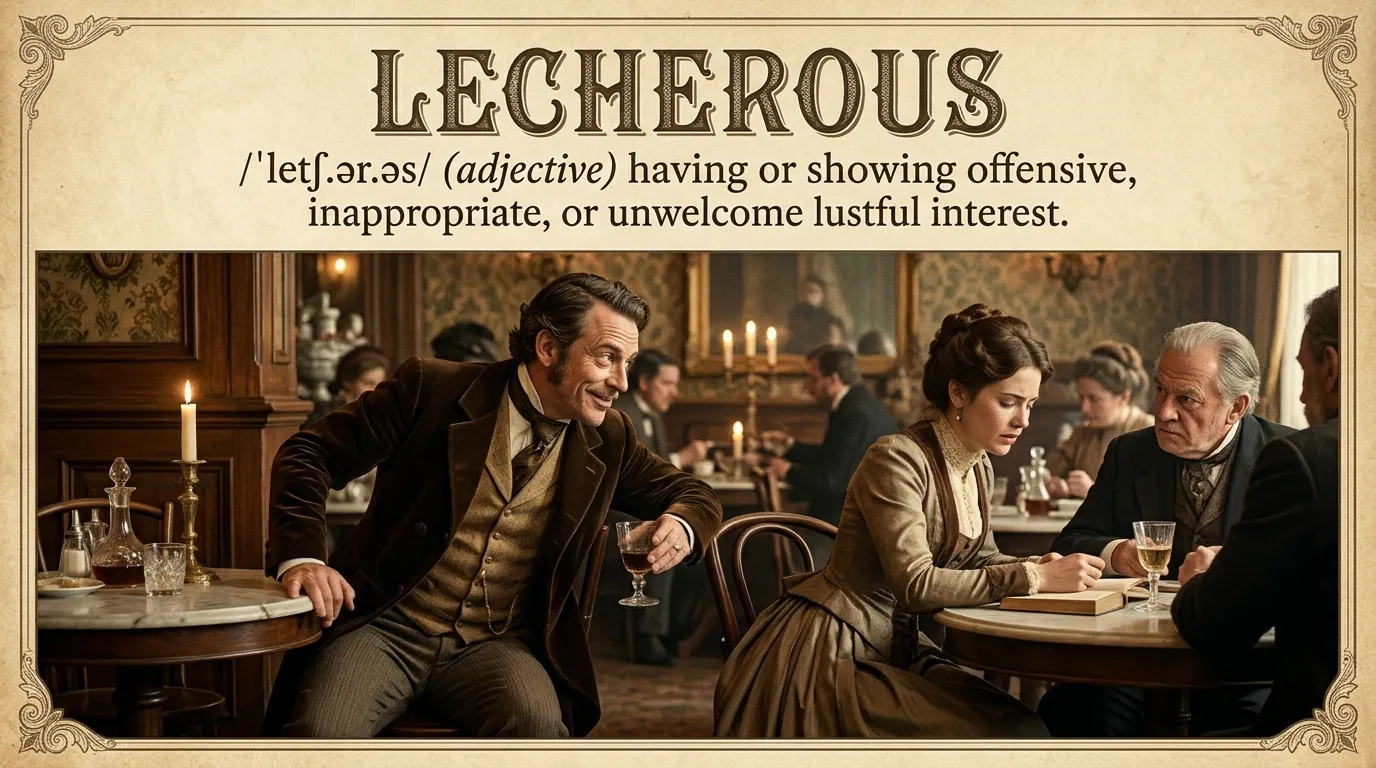
Have you ever heard someone called lecherous and wondered what that word really means? It is not a word you hear in every daily chat, but it can carry a strong message.
The lecherous meaning is showing an excessive or improper sexual interest in other people. It often describes a person who looks at others with sexual desire, makes unwanted sexual comments, or acts in a way that feels lustful and disrespectful.
For example, if a man keeps making sexual comments to a person who feels uncomfortable, someone might describe his behavior as lecherous. The word often has a negative tone because it suggests a lack of respect or self-control.
In this guide, you will learn what lecherous means in simple English, how to pronounce it, and how to use it in real sentences. You will also see the difference between lecherous, lustful, flirtatious, and creepy. These words may seem alike, but they do not mean the same thing.
By the end, you will know when this word fits and when another word may express your meaning more clearly.
Quick Answer: What Does Lecherous Mean?
Lecherous means showing strong, often excessive or improper sexual desire. It usually describes a person, a look, a comment, or behavior that seems driven by sexual lust.
Simple example: “His lecherous stare made her feel uneasy.”
In this sentence, lecherous suggests that the stare showed unwanted or disrespectful sexual interest.
Lecherous Definition and Meaning
The word lecherous is an adjective. An adjective describes a person, place, thing, or action. In this case, it describes sexual desire or behavior that people see as excessive, improper, or offensive.
A lecherous person may make suggestive remarks, stare at someone in a sexual way, or show an unwanted interest in another person’s body. The word often suggests poor judgment or a lack of respect for personal boundaries.
However, context matters. You should not call every person who feels sexual attraction lecherous. Normal attraction, respectful interest, and mutual flirting do not automatically fit this word.
The key idea is the negative tone of excessive or improper sexual desire.
Lecherous Meaning in Simple Words
In simple English, lecherous means too focused on sex in a way that seems improper or disrespectful.
Think of these examples:
- A lecherous stare: a look that seems to show unwanted sexual desire.
- A lecherous comment: a sexual remark that seems crude or unwelcome.
- Lecherous behavior: conduct that shows improper or excessive sexual interest.
The word is often used to criticize someone’s actions. It is stronger than simply saying that a person finds someone attractive.
How to Pronounce Lecherous
The American pronunciation of lecherous is /ˈletʃ.ɚ.əs/. It has three syllables. The stress falls on the first syllable.
Say the word slowly, then try it in a sentence:
- “His lecherous behavior upset the guests.”
- “The novel describes the villain as lecherous.”
You may find it easier to learn the word by reading it aloud in a full sentence. This also helps you understand its tone.
Lecherous Synonyms and Related Words
Several English words have a meaning close to lecherous. Still, each word has its own shade of meaning.
Here are the most useful synonyms:
- Lustful: Shows a strong sexual desire.
- Lascivious: Shows sexual desire in a way that seems improper or offensive.
- Lewd: Often describes crude sexual words, jokes, acts, or images.
- Libidinous: Describes a strong or excessive sexual appetite.
- Salacious: Often describes content, remarks, or stories that focus on sexual matters.
- Prurient: Describes an excessive or unhealthy interest in sexual matters.
- Indecent: Describes behavior, language, or material that breaks common standards of proper conduct.
Oxford lists lascivious and lustful as synonyms for lecherous.
You do not need to memorize every word. Start with lustful because it is easy to understand. Then learn lecherous as a more disapproving word that often suggests improper sexual interest.
Lecherous vs. Lustful vs. Flirtatious vs. Creepy
These words can overlap, but they do not mean the same thing. Choosing the right word helps you describe a person or action more clearly.
| Word | Main meaning | Tone | Example |
| Lecherous | Shows improper or excessive sexual interest | Strongly negative | He gave her a lecherous look. |
| Lustful | Shows strong sexual desire | Can be negative or neutral, based on context | The story describes a lustful desire. |
| Flirtatious | Shows romantic or playful interest | Often light or positive | Her flirtatious smile made him laugh. |
| Creepy | Makes someone feel uneasy or afraid | Negative and broad | His behavior felt creepy. |
| Lewd | Uses crude or offensive sexual words or actions | Negative | He made a lewd joke. |
The main difference is the type of behavior each word highlights.
Lecherous focuses on improper sexual interest. Lustful focuses on desire. Flirtatious can describe friendly, playful, or romantic behavior. Creepy describes something that causes discomfort, even when it has nothing to do with sex.
For example, a person who smiles and gives a sincere compliment may be flirtatious. A person who keeps making unwanted sexual remarks may seem lecherous. The words describe different kinds of conduct.
How to Use Lecherous in a Sentence
The easiest way to learn a word is to see how people use it. Lecherous can describe a person, a look, a comment, or behavior.
Here are eight original examples:
- A lecherous stare: “She moved away after noticing his lecherous stare.”
- A lecherous man: “The novel portrays the rich merchant as a lecherous man.”
- Lecherous behavior: “The manager warned him about his lecherous behavior.”
- A lecherous comment: “His lecherous comment made the room go quiet.”
- A lecherous smile: “The character gave a lecherous smile before making another rude remark.”
- A lecherous character: “The author uses a lecherous character to show a lack of respect for others.”
- A lecherous look: “He gave her a lecherous look that made her uncomfortable.”
- A lecherous attitude: “The film presents his lecherous attitude as a serious flaw.”
These examples show common ways to use the adjective. They also show why the word often appears in stories, reviews, and descriptions of poor conduct.
Can You Use Lecherous for Things Other Than People?
Yes. You can use lecherous to describe a look, smile, remark, attitude, or piece of content that suggests improper sexual desire. Dictionaries also record uses related to material that is sexually suggestive.
For example:
- “The film gives the villain a lecherous grin.”
- “The story contains a lecherous remark.”
- “The character’s lecherous attitude shapes how others see him.”
Use the word with care. It is judgmental, so it may sound too harsh if the behavior is harmless or welcome.
What Is the Difference Between Lecherous and Lechery?
The words lecherous and lechery come from the same word family, but they serve different roles in a sentence.
Lecherous is an adjective. It describes someone or something.
Example: “The king was known for his lecherous behavior.”
Lechery is a noun. It refers to excessive or improper sexual desire or conduct.
Example: “The novel explores the king’s lechery.”
The related noun lecher refers to a person who shows excessive sexual desire. The adverb lecherously describes how someone does something, while lecherousness refers to the quality or state of being lecherous.
A simple way to remember the difference is this: a person may behave in a lecherous way, display lechery, or be described as a lecher.
What Is the Origin of the Word Lecherous?
Lecherous has a long history in English. Its roots go back to Middle English and Old French. The related word lecher once referred to someone given to sensual pleasure or excess.
Over time, the word became linked closely to excessive sexual desire. Today, dictionaries mark it as a disapproving term. This means people usually use it to criticize, rather than praise, the behavior they describe.
You do not need to know its full history to use it correctly. The most important point is its modern meaning: strong sexual interest that seems unpleasant, excessive, or improper.
Common Mistakes to Avoid When Using Lecherous
Because lecherous is a strong word, it helps to know when not to use it.
Mistake 1: Using it for every kind of attraction.
Finding someone attractive does not make a person lecherous. The word suggests sexual interest that seems excessive, improper, or unpleasant.
Mistake 2: Treating it as a synonym for flirtatious.
Flirting can be welcome and respectful. Lecherous behavior usually carries a negative meaning.
Mistake 3: Using it without enough context.
If you call someone lecherous, readers may assume that the person has shown improper sexual interest. Make sure the facts support that description.
Mistake 4: Assuming it describes only men.
The word often appears in descriptions of men, but it can describe people of any gender. The key is the behavior, not the person’s gender.
Mistake 5: Using it in every formal situation.
In a workplace report or a serious complaint, describe the exact behavior when possible. For example, “He made repeated unwanted sexual comments” gives clearer information than simply calling him lecherous.
Quick Reference: How to Use Lecherous Correctly
Use this checklist when you want to understand or use the word in writing.
| Quick check | What to remember |
| Part of speech | Adjective |
| Simple meaning | Showing improper or excessive sexual desire |
| Tone | Negative or disapproving |
| Common synonyms | Lustful, lascivious, lewd |
| Common phrases | Lecherous look, lecherous stare, lecherous behavior |
| Related noun | Lechery |
| Related person noun | Lecher |
| Best usage tip | Use it when the context supports its strong meaning |
This quick guide can help you choose the right word when writing a sentence, reading a novel, or trying to understand a conversation.
Frequently Asked Questions About Lecherous Meaning
1. What does lecherous mean in simple English?
Lecherous means showing too much or improper sexual interest in someone. It often describes behavior that feels disrespectful or unwelcome. For example, a person who makes unwanted sexual remarks may be described as lecherous.
2. Is lecherous a bad word?
It is not a swear word, but it has a strong negative meaning. People use it to criticize sexual behavior they see as improper, excessive, or unpleasant. Use it with care because it can sound like a serious accusation.
3. What is a lecherous look?
A lecherous look is a stare that seems to show unwanted or improper sexual desire. For example, “She felt uneasy when he gave her a lecherous look.” The phrase suggests more than simple attraction.
4. What is the best synonym for lecherous?
Lustful is one of the closest and easiest synonyms. Other options include lascivious and lewd. The best choice depends on the context. Use lecherous when you want to stress improper or excessive sexual interest.
5. What is the opposite of lecherous?
There is no single perfect opposite in every context. Words such as respectful, decent, and modest may express the opposite idea in certain sentences. For example, “He showed respectful behavior” contrasts with “He acted in a lecherous way.”
6. Can a woman be described as lecherous?
Yes. Lecherous can describe a person of any gender. Although dictionaries often use examples involving men, the word itself is not limited to men. The meaning depends on the conduct or sexual interest being described.
7. What is the difference between lecherous and lustful?
Both words relate to sexual desire. Lustful describes strong sexual desire, while lecherous usually adds a sense of improper or unpleasant interest. The second word is more clearly disapproving in common use.
Conclusion:
The lecherous meaning is simple once you understand its tone. It describes strong or excessive sexual interest that seems improper, unpleasant, or disrespectful. It can refer to a person, a stare, a comment, or a pattern of behavior.
Remember that lecherous is not the same as flirtatious. Friendly flirting and normal attraction do not automatically fit the word. Context matters.
To use it well, choose examples that clearly show the meaning. If you are describing a real event, focus on the behavior you observed rather than making claims you cannot support.
Keep the synonyms and examples in this guide as a quick reference, and you will be better prepared to recognize and use the word in everyday English.

Hi, I’m Christopher Hayes. I’m interested in the words and expressions people use to share their thoughts, feelings, and experiences. I especially enjoy exploring idioms, everyday phrases, similes, and figurative language.
At SimiliezMeta.com, I help readers understand the meanings behind common expressions through simple explanations and relatable examples. I aim to explain not only what a phrase means but also how and when people use it naturally.


